


🔪 One on one with weapons is never good
If you think that a gunfight is just a “tougher” version of unarmed combat, you’re already too late.
And you’re probably already hurt.
There are no shortcuts with guns .
The margin of error is eliminated.
Luck lasts a second.
The draw is a lie.
The knife is not an accessory, it is not a technical variant, it is not “one more problem to manage”.
It is an absolute equalizer , a tool that cancels out strength, experience, weight, athleticism and – often – even courage.
Strong men, expert fighters, devastating strikers have all been caught in it. And they haven’t come out.
When a blade comes into play, being touched is not a detail .
It’s a wound.
It’s a loss of function.
It’s blood.
Sometimes it’s the end.
This article is not intended to reassure you.
It was born to shatter your illusions .
It’s about mentality, even before technique.
It talks about distance, about exit, about position, about survival.
He talks about why, when working with weapons – especially edged ones – the only sensible objective is one:
YOU MUST NEVER TOUCH ME.
If you’re looking for romance, sportsmanship, or “clean” duels, this is not the place.
If you want to understand why the use of weapons represents the fourth dimension of combat and why it can radically transform the way you move, think, and train, then continue reading.
Here we enter the Matrix.
And you don’t come out of the Matrix the same.
Knife is not a game.
One on one with weapons is never good .
It’s not an opinion. It’s a fact.
When weapons come into play, some discounts you might be able to afford with your bare hands are immediately erased .
Mistakes that produce limited consequences in unarmed combat become irreversible with a weapon .
With your bare hand you can:
- to absorb a blow
- exchange
- allow yourself imperfect timing
- recover from a mistake
- With a weapon, no.
With a weapon every contact is potentially a wound , and every wound is a loss of function, of time, of lucidity.
And it is often a permanent loss .
The knife, in particular, is one of the most versatile, widespread, and treacherous tools ever invented by man.
It’s small, inexpensive, easily concealable, and always available.
It does not require sophisticated training to be lethal and does not need superior physical strength to operate .
And that’s what makes it so dangerous.
Even though millennia have passed since its appearance, the knife remains:
- one of the most effective weapons for killing
- one of the most used tools in real attacks
- one of the most controversial topics when talking about self-defense
Because it is the weapon that breaks comfortable narratives .
Debunk the myth of the invincible fighter.
It disproves the idea that being strong, trained or technically prepared is enough.
And it was precisely by observing this phenomenon that I began to seriously study the use of weapons.
Over the years, participating in workshops, seminars and training sessions around the world, I have noticed a constant that initially seemed like just a coincidence:
Many of the best strikers I met were also expert practitioners in the use of edged weapons .
I’m not talking about marginal curiosity.
I’m talking about people who:
- they studied the blade seriously
- they integrated it into their training
- they considered it a fundamental part of their martial growth
At first you think it’s a “niche” choice.
Then you realize it ‘s not at all .
Those strikers had something in common:
- a maniacal control of distance
- an extremely developed footwork
- a much more conservative risk management
- a clarity under pressure that is off the scale
They weren’t just more technical.
They were harder to touch.
And that’s where it becomes clear that weapon work isn’t an aesthetic addition to your martial path, but a multiplier .
A brutal accelerator of awareness.
Studying weapons, and especially edged weapons, forces you to confront an uncomfortable truth:
👉 you can’t afford to make mistakes .
You can’t rely on the exchange.
You can’t think, “I’ll hit it and then we’ll see.”
You can’t think in terms of a draw.
This awareness changes everything:
- how do you move
- how do you enter
- how do you get out
- how do you read the other
- how do you perceive space
And that’s why, if you practice combat sports or self-defense and ignore weapons work, you’re leaving a fundamental part of your evolution on the table .
Not because you’ll use a knife.
But because the knife forces you to become smarter, more evasive, and more honest about the realities of combat.
🔥 When Striking Meets the Blade: Mistakes You Can’t Afford to Make
One of the biggest mistakes I see strikers make when they approach gunwork is thinking that the knife is just one more problem to deal with , not a total paradigm shift.
In unarmed combat, even at a high level, many mechanisms work because there is an inherent tolerance for error.
With a blade, that tolerance no longer exists .
And here the problems begin.
❌ Mistake #1 – Accepting the exchange
The striker is used to the exchange:
- within
- I hit
- I absorb
- relaunch
With a knife this pattern is suicidal .
👉 Going in knowing that “you’ll get something” is an acceptable bare-handed strategy.
👉 With a blade means guaranteed wound .
Many strikers continue to think like this:
“I hit hard, even if it touches me it doesn’t matter.”
With a blade it really matters .
An “unloaded” cut, while the opponent is falling, can:
- to cut a tendon
- to open an artery
- to compromise a hand, a forearm, a leg
Trading with weapons is not courage , it is ignorance of the risk.
❌ Mistake #2 – Overcommitting the attack
Strong strikers tend to:
- load the shot
- shifting your weight too much
- “enter with conviction”
- With weapons this means giving away the return line .
The knife does not need power.
It needs an inch and the right amount of time .
Each overcommit:
- extend your stay in the dangerous distance
- makes the exit slow
- exposes vital lines
With weapons , attack is never just attack .
It’s always attack + immediate exit .
❌ Mistake #3 – Looking at the target instead of the distance
Many strikers work “on target”:
- head
- body
- liver
With a blade the real target is not the other person’s body.
It’s the distance .
Who has never worked seriously with weapons:
- it goes in too much
- there’s too much left
- it comes out badly
With the knife you don’t fight the man , you fight the space between you two.
❌ Mistake #4 – Trusting blocking
Bare hand:
- blocks
- cover
- absorb
With a blade:
- don’t block
- you don’t absorb
- you don’t cover
Any direct contact with the weapon is a losing bet.
This is one of the biggest shocks for strikers:
“What was once a good defense is now a wound.”
❌ Mistake #5 – Thinking the attacker is “playing fair”
The striker is often formed in contexts:
- regulated
- symmetrical
- readable
The knife attack:
- it is not declared
- it is not symmetrical
- it’s not clean
It is often:
- explosive
- repetitive
- charged with emotional violence
If you are not prepared for this initial shock , the technique won’t even start.
🧠 This is where short fencing comes into play
And this is exactly where short fencing becomes the natural bridge.
Short fencing:
- it is not born for exchange
- it is not born for the draw
- It’s not born to “see who’s tougher”
It was born to avoid being hit .
And this makes it perfectly compatible with:
the knife mentality
the reality of armed aggression
the evolution of an intelligent striker
🔗 The key link: distance, timing, output
Short fencing teaches you three things that pure striking cannot fully teach you :
-
Obsessive management of distance
Not “I’m in / I’m out”, but how in and for how long .
-
Conservative timing
You don’t look for the “good” shot, you look for the shot that doesn’t expose you .
-
Exit as a priority
Every action begins with a planned outcome.
If there is no exit → the action is wrong.
🔪 Why knives make you a better fighter (even with your bare hands)
Paradoxically, working with the blade:
-
makes you more evasive with your bare hand
-
reduces your dependence on exchange
-
refine your footwork
-
increase your intention reading
Not because you’ll use a knife.
But why do you stop accepting the idea of being hit ?
And this is the real leap in level.
⚠️ Brutal summary
-
Striking teaches you how to hit
-
Guns teach you how to survive
-
Short fencing is the operational bridge between the two worlds
If you practice combat sports or self-defense and you don’t integrate this work, you are not “choosing another style”.
You are giving up a core skill .
And with weapons, giving up skills comes at a high cost .
Perfect.
Here you’ll find three ready-made worksheets to include in your article (or reuse as PDFs, slides, or gym posters).
No fluff. Just stuff that changes the way you move.
🧠 TECHNICAL BOX
Typical striker mistakes 🆚 Weapon mentality
|
Striker Mindset (empty hand) |
Knife/Weapon Mindset (reality) |
|---|---|
|
I accept the exchange |
The exchange = certain wound |
|
I enter “with determination” |
I only enter if I already have an exit |
|
I hit and I stay |
I hit and go out immediately |
|
Blocking / cover |
No blocking: pure evasion |
|
Target = head / body |
Real target = distance |
|
Aggressive timing |
Conservative timing |
|
I can recover |
A mistake can be final |
📌 Keynote
The knife does not reward courage , it rewards spatial discipline .
If your strategy is to “get something,” you’re already out of the game .
🥊 PROGRESSIVE DRILLS
Striker → Blade → Evasion
(step training, not jumping)
🔹 DRILL 1 – Striker Reset (bare hand)
Objective: To eliminate the instinct to exchange
-
Light sparring
-
Absolute ban on staying after the coup
-
Each attack must include:
-
hit
-
micro-displacement
-
reset distance
-
❌ Penalty:
If you get touched after hitting → point to the other.
👉 It helps break the “I come in and stay out” habit.
🔹 DRILL 2 – Passive Blade (Mental Introduction)
Objective: to make people understand that even a slow shot cuts
-
Partner A: training knife
-
Partner B: bare hand
-
It doesn’t accelerate , but it maintains line and pressure
-
B must:
-
hit
-
go out without contact
-
📌 Here the striker discovers an uncomfortable truth:
You don’t need speed to do damage, you just need to be there.
🔹 DRILL 3 – Active Blade (Reality)
Objective: survival, not “victory”
- Both with training knife
- Free attacks
- It only matters if you come out clean
🧠 Golden rule:
Every contact = wound = serious mistake
If you are touched:
- stop
- reset
- immediate error analysis
🔹 DRILL 4 – Pure Escape (Matrix Level)
Goal: Never be there
-
No mandatory counterattack
-
I only work on:
-
distance
-
corners
-
timing
-
-
You win if you don’t get touched
📌 This drill builds the right mindset , not the ego.
📐 OPERATIONAL VISUAL DIAGRAM
Attack / Stay / Exit
🔺 1. ATTACK
- Brief
- Linear
- Without loading
- No emotional permanence
👉 If you “like” the attack, it’s already too long.
⛔ 2. STAY (RED ZONE)
- It’s the most dangerous area
- Every additional millisecond = exponential risk
- This is where good fighters die
📌 Goal: reduce it to almost zero
🔻 3. EXIT
- Must exist before the attack
- Lateral, angled, never back in line
- Right away
👉 If you don’t know where you’re coming out, don’t enter .
⚠️ FINAL MANIFESTO
With weapons you don’t win by hitting.
You win by not being there.
- No exchange
- No draw
- No second chances
Knife is not a game.
The 4th dimension of combat, weapons.
The technical, physical, and mental approach to using edged weapons pushes the level of training to boundaries that you can’t reach with just your bare hand (striking, to be clear).
With weapons you can NEVER be touched and the thrusts you are forced to manage with absorbs and dodges bringing the level of footwork to the extreme.
This approach leads you to an initially psychological approach where even if it is a workout you must never be touched and physical with the constant search to leave the class without having been touched.
This should be your goal when using edged weapons. So be careful!!

This mantra that echoes in your head is frustrating at first because you get touched so many times, but it is this constant search that leads you to become evasive not only with weapons but also with your bare hands.
This mental approach makes you increasingly aware of your surroundings, your distance, your body position, and your footwork.
It’s one of the most complicated jobs! But it brings long-term satisfaction to anyone who knows and starts working with this mindset.
Working with weapons is a MENTALITY.
 Working with weapons requires a certain methodological and approachive mindset.
Whether it’s firearms or edged weapons, striking a blow without worrying about receiving another becomes a pointless victory.
There is no such thing as a draw with weapons, it means two wounded at best or two dead.
Perfect.
Below you will find the technical and conceptual expansion of this scheme, transformed from a strong phrase into an operational principle that should guide all weapons training (and, if you’re smart, even empty-hand training).

⚖️ The real combat score (especially with weapons)
In combat – and even more so when weapons come into play – you have to get used to thinking in a brutal, simple, almost mathematical way.
There are no emotional nuances.
There are no “good shots”.
There are outcomes .
And the scheme is this:
0 – 0  → va benissimo
1 – 0  → per te va benissimo
1 – 1  → non va bene
0 – 1  → sei stato fregato
It seems trivial.
It’s actually one of the most important mental filters you can install .
✅ 0 – 0 → VERY GOOD
Nobody hits anybody.
Nobody gets hurt.
They both go out.
👉 This is already a success.
In the real world:
- you avoided
- you read the situation
- you managed distance and timing
- you didn’t play the hero
In self-defense, 0–0 is an excellent result .
Whoever despises it hasn’t understood the game.
✅ 1 – 0 → IT’S PERFECT FOR YOU
You hit.
You go out.
The other one doesn’t.
This is the only acceptable offensive scenario with weapons :
- hit
- exit
- distance re-established
It’s not aggression.
It’s surgical efficiency .
If you hit without being hit , you did everything right:
- choice
- timing
- corner
- exit
❌ 1 – 1 → NOT GOOD
This is where illusions collapse.
In sports:
- it may seem “even”
- it may seem acceptable
- sometimes he even gets rewarded
In reality:
- you are both injured
- both compromised
- both in danger
👉 There is no such thing as a draw with weapons.
A 1–1 means:
- two injured at best
- one dead and one injured in the worst ones
- two deaths in the real ones
If your training accepts 1–1 as a normal outcome ,
you are training a suicidal mindset .
❌ 0 – 1 → NO NEED TO EXPLAIN IT
You get hit.
You don’t hit.
End.
There is nothing to romanticize here.
There is no “but I almost…”.
There is no “if only…”.
👉 You’ve been scammed.
And with a blade, you often don’t get a second chance .
🧠 Why this scheme is devastating (in a good way)
Why:
- delete the exchange
- eliminate the ego
- eliminate the “I’ll try”
- eliminate the culture of useless sacrifice
And it forces you to ask just one question, before every action:
Can I go out without getting hit?
If the answer is no → do not enter .
🔪 Direct implications on training
If you train with weapons and:
- you accept the 1-1 → you’re wrong
- press blind aggression → you’re doing it wrong
- you ignore the exit → you’re doing it wrong
Each drill should be evaluated like this:
- Have you been touched? ❌
- Did you stay in the distance? ❌
- Did you hit but stay? ❌
It doesn’t matter “how strong”.
It matters how clean you are .
⚠️ Final inconvenient truth
Many fighters are very strong.
Many strikers are devastating.
Many technicians are very good.
But they mentally accept the 1–1 .
And with weapons, that makes them vulnerable.
If you want to work seriously with the knife, with short fencing, with real self-defense, this scheme must become your automatic filter .
🧠 Operational mantra
Don’t try to win.
Try not to lose.
With weapons, it’s the same thing.
Knife is not a game.
Street Fight Mentality.

🗡️ Traditional fencing
From an aristocratic martial code to a lesson in armed survival
Fencing is a European martial art.
Not a sport born for entertainment, but the refined remnant of a real martial code , developed in an age when men actually hurt and killed each other with weapons.
It was an aristocratic code , yes, but not so idealized as to eliminate the danger.
And not so “noble” as to exclude:
- tactics
- deceptions
- provocations
- gray areas
Anyone who imagines a duel as a question of pure honor has failed to understand one fundamental thing:
👉 the duel was regulated, but it was not safe .
The rules served to:
- limit the chaos
- make the comparison “manageable”
- reduce (not eliminate) the likelihood of death
Not to render it harmless.
⚔️ Ritual combat, but never fake
When you start studying traditional fencing seriously and go beyond the technical surface, something interesting happens:
you begin to sense that you are not just watching a sport , but a structured form of armed self-defense .
Each element has a practical meaning:
- the distance
- the weather
- the position of the body
- the importance of the initiative
- the fear of the simultaneous blow
Nothing happens by chance.
Fencing is ritualized combat , not simulated combat.
Ritual does not eliminate violence, it channels it .
And this is precisely what makes it valuable as a conceptual basis.
🔪 Why talk about fencing when we talk about knives?
Here comes the key point.
I’m talking to you about fencing not because you have to use a sword , but because some of its principles are still extremely valid today if you:
- take it out of the sporting context
- clean up the rules
- suitable for urban reality
The reason is simple and brutal:
👉 Many people carry knives.
👉 the sword no.
But:
- distance management
- the concept of line
- the timing
- the exit from the action
- the fear of the double whammy
they are identical .
Short fencing did not arise from nothing.
It comes from here , adapted to:
- small spaces
- handguns
- non-ritual assaults
- absence of rules
📏 Fencing Rules: Useful, but Dangerous if Copying
To truly understand the meaning of this article it is important to know the basic rules of sport fencing , not to apply them, but to know what you are eliminating or transforming .
The fencing rules can be:
- an excellent teaching tool
- a basis for structuring workouts
- a common language for training
But only if you are aware of one fundamental thing:
👉 many of these rules, in self-defense, become limitations .
And one limit should not be ignored.
Go:
- eliminated
- or used deliberately to create targeted exercises
🧠 How to Use Fencing Smartly for Short Fencing
If your goal is self-defense, fencing is not for you:
- imitated
- copied
- romanticized
It needs to be dismantled .
Some practical examples:
- Priority → useful for studying the initiative, to be eliminated as a security concept
- The simultaneous shot → excellent teaching tool, unacceptable as a real outcome
- The platform → useful for footwork, limiting for three-dimensionality
- The referee → excellent for sport, non-existent in reality
Fencing becomes really useful when you use it against itself .
🔑 Operational summary
Traditional fencing:
- it’s not a game
- it’s not folklore
- it’s not a relic
It is an archive of martial solutions developed when weapons were part of everyday life.
Short fencing takes:
- the principles
- not the rules
- the logic
- not the shape
And brings them back to where they are needed today:
in the dirty, fast and non-ritual reality of the urban knife .
🧠 Final rule
Study fencing to understand what survives the rules.
Delete everything else.
This is how an ancient art becomes a modern tool for survival .
Knife is not a game.
Street Fight Mentality.
⚔️ Fencing Fundamentals
Here you will find the complete expansion of the Fundamentals of Fencing , rewritten in a martial-operational key , with a critical and functional reading for short fencing and personal defense .
I don’t just explain how it works , but what these rules actually train you to do… and what they make you forget if you’re not careful .
Rules, Structure, and What They Really Teach You (Even When You Don’t Want Them)
Modern sport fencing is a highly regulated discipline , built to make armed combat:
- repeatable
- judgeable
- safe (as far as possible)
But every rule, besides teaching something , also introduces a distortion .
And this is where you have to start thinking like a fighter, not an athlete.
⏱️ Meeting structure
A fencing match consists of:
- 3 segments of 3 minutes each
- fought on a platform between 1.5 and 2 meters wide
What it teaches
- time management
- economy of movement
- psychological pressure on deadline
What distorts
In reality:
- time is not segmented
- there is no “rest”
- there is no reset
👉 Getting used to fighting knowing that “there’s not much time left” alters your decisions .
With a knife, time is continuous and unpredictable .
🎯 Scoring system
Points are awarded when a fencer hits the valid target zone , which varies depending on the weapon.
Whoever scores the most hits wins.
In case of a tie:
-
we fight for an extra minute
-
Before extra time, a draw will be made to determine who will win in the event of another draw
This forces fencers to be aggressive.
What it teaches
-
initiative
-
ability to force action
-
pressure management
What distorts
👉 Forcing the action because “it needs the point” is exactly what you should not do in reality.
With weapons:
-
forced aggression is a mistake
-
waiting can save you
-
the draw is not neutral (1-1 is a disaster)
🚨 Penalties and discipline
Penalties are awarded for:
-
pushes
-
use of hands to deflect the blade
-
refusal to greet the opponent
Sanctioning system:
-
yellow card → warning
-
red card → penalty point
-
black card → disqualification
It is forbidden to push the blade away with the arm, even if in practice it happens often , especially at high levels, where the speed exceeds the referee’s ability to control it.
What it teaches
-
discipline
-
respect for the rules
-
technical cleaning
What distorts
In reality:
-
there are no fouls
-
there are no referees
-
there are no disqualifications
👉 If a defense works only because it is forbidden to respond , it is not a real defense.
🗡️ Fencing Weapons (and Their Mental Imprinting)
⚔️ Foil
Origin: France, 18th century
Function: training
Valid shots: only the tip
Target: Torso only
The foil is:
- light
- flexible
- ultra technical
What it teaches
- precision
- check
- micro-timing
- initiative management
Mental risk
👉 It gets you used to:
- trust the priority
- ignore the “after” shots
- work on a limited target
In reality:
- there is no priority
- the whole body is a target
🗡️ Sword
Origin: 19th century duels
Valid shots: only the tip
Target: whole body
The sword is the style:
- more patient
- more wait-and-see
- closer to the classic duel
What it teaches
- risk management
- long time
- error provocation
Mental risk
👉 Normalizes double-hitting .
In sports:
-
double hit = point for both
In reality:
-
double hit = two wounded
⚔️ Sabre
Origin: cavalry
Valid shots: cut and point
Target: Waist up (including mask and back)
The saber is:
- explosive
- aggressive
- based on footwork and pressure
The flèche (arrow shot) is permitted :
- body projected forward
- maximum offensive effort
What it teaches
- pressure
- aggression
- speed distance control
Mental risk
👉 Overcommitment.
With a real blade:
- the exposure is total
- the exit is difficult
- the return is lethal
🧠 Final reading (as a fighter)
Sport fencing:
- he teaches very well
- but it protects too much
Each protection:
- create skills
- but it also creates habits
Your job, if you are in self-defense or short fencing, is this:
Understanding what the rules train
and what they hide.
🔪 Translation for reality
- The platform → becomes an environment
- The weather → becomes unpredictable
- The score → becomes the outcome
- Priority → becomes an illusion
- The valid hit → becomes a wound
If a technique works only because someone is judging , it’s not yours.
If it works even when no one stops time , then it’s worth it.
Knife is not a game.
Street Fight Mentality.

🗡️ A Little Fencing Technique (And Why You Really Need to Understand It)
In sport fencing, when a hit is awarded and the attack is interrupted, the judges reconstruct the winning action using precise technical language .
The same language is used by commentators, instructors and in the rules.
Knowing these terms is not general knowledge .
It’s understanding how an armed combat system thinks .
The problem arises when these concepts are transferred into reality without filters .
Let’s look at them one by one.
⚔️ Attack
Fencing definition
It is the first offensive action , that is, the moment in which a fencer takes the initiative by advancing and effectively threatening the target.
In sport fencing
-
The attack establishes priority
-
The attacker is “entitled” to the point if the other does not defend correctly
In real combat with weapons
Here the first serious problem arises.
👉 Attacking doesn’t mean you have the right to anything.
To attack means:
-
enter the lethal distance
-
to expose oneself
-
take the maximum risk
In the real world , attacking is not a privilege , it’s a gamble.
If you attack without having already planned the exit, you are playing Russian roulette .
🛡️ Parade
Fencing definition
It is a winning defense that deflects the attacker’s blade, preventing a valid strike.
In sport fencing
- The parade is clean
- It is visible
- It is recognized by the judge
- Returns the priority
In real combat with weapons
The parade becomes conceptually dangerous.
👉 With a real blade:
- the deviation may be incomplete
- the blade may slip
- contact can still hurt
For this reason, in the real context, the parade must be seen as an emergency , not as a primary solution.
The royal defense favors:
- evasion
- corner
- line break
Not “stopping the blade”, but not being there .
🔁 Reply
Fencing definition
It is the attack that immediately follows a successful save.
In sport fencing
- It’s logical
- It is encoded
- It is often automatic
In real combat
The risk here is enormous.
After a save, you’re still in the distance .
The immediate response, if done without moving and exiting, means:
- to remain in danger
- expose oneself to the return
- accept the famous 1-1
In reality, the “answer” must become:
👉 parade/evasion → exit → (maybe) return
Not parried → direct response.
🔄 Remittance
Fencing definition
It is an attack made immediately after a failed attack of your own, without further advance .
In sport fencing
-
It helps to regain the initiative
-
It’s very fast
-
Exploit an opponent’s micro-delay
In real combat
The remittance is one of the most dangerous concepts to copy.
Why?
Because it presupposes that:
- the opponent is “late”
- the distance is still manageable
- the risk is acceptable
With a real blade, a remittance:
- it happens in the dirtiest distance
- increase exposure time
- multiplies the risk of being hit
👉 In reality, after a failed attack, the priority is not to put it back .
It’s going out .
🔂 Double
Fencing definition
It is the attack carried out against an opponent who has lost priority due to inaction or slowness.
In sport fencing
- It’s legitimate
- He is awarded
- It is often spectacular
In real combat
Doubling down is a mental trap.
Because it implies this idea:
“The other one is slow, I can afford another shot.”
With weapons:
- perceived slowness is often an illusion
- the second half is when the shot you don’t see arrives
- the double is often the point where the simultaneous hit occurs
👉 Doubling up with a blade is one of the most common mistakes made by experienced fighters.
🧠 Brutal summary
The fencing technique is:
- refined
- intelligent
- historically very valid
But it was sported .
If you import it into real combat without adapting it:
- the attack becomes exposure
- the parade becomes a gamble
- the answer becomes permanence
- the remittance becomes obstinacy
- doubling becomes suicide
🔪 Operational translation for reality
|
Sports fencing |
Reality with weapons |
|---|---|
|
Attack |
Controlled entry |
|
Parade |
Emergency, not plan |
|
Answer |
Only if it creates output |
|
Remittance |
Common error |
|
Doubling |
High risk 1–1 |
🧠 Final rule
If a technical concept pushes you to stay in the distance,
that concept needs to be rewritten.
With weapons, technique is only useful if it gets you out .
Knife is not a game.
Street Fight Mentality.
🗡️ Weapons and styles in fencing
Not to say “better or worse”, but to understand what you can bring with you into short fencing and what you absolutely must leave on the piste .
What they really teach (and what becomes dangerous in reality)
Modern fencing is divided into three main weapons – foil, épée, and sabre – each with its own logic, rhythm, and technical culture.
Understanding them is not useful for becoming a fencer, but for understanding how a weapon affects the mentality of the person who uses it .
⚔️ Foil
The realm of priority and micro-timing
In foil everything revolves around priority .
Whoever attacks first, if he does it correctly, is “entitled” to the point.
This produces a style:
-
extremely technical
-
based on short, very rapid movements
-
with an obsessive attention to initial timing
What does it teach that is useful?
-
reading of the intention
-
millimetric precision
-
first half management
-
emotional control
The problem in reality
The foil teaches us to trust in priority , not in safety.
In short fencing and in real combat:
-
priority does not exist
-
the first shot doesn’t protect you
-
the opponent’s return is always real
👉 If you import the foil without adapting it, you risk developing a mentality like this:
“I started it, so I’m good to go.”
With a real blade, this is a lethal lie .
🗡️ Sword
The closest to the duel… and the double-shot problem
The sword is the style that, visually and conceptually, most resembles the classical duel:
-
the whole body is a target
-
there is no priority
-
the counterattack is central
-
collisions are allowed
Epee fencers often:
-
they don’t try to attack first
-
provoke the attack
-
they respond on error or opening
What does it teach that is useful?
-
patience
-
risk management
-
long time reading
-
ability to wait
The problem in reality
The sword normalizes the double strike .
In sports:
-
double hit = point for both
-
accepted and regulated situation
In reality:
-
double hit = two wounded
-
often two deaths
-
definitely no winner
👉 If you don’t mentally re-educate the swordsman, he will carry with him the idea that “hitting even if you are hit is acceptable” .
With a knife, that’s exactly what shouldn’t happen .
⚔️ Sabre
Speed, pressure and pure aggression
The saber is the most explosive weapon:
-
it is struck with the edge and with the tip
-
the target is the upper body
-
parades are difficult
-
footwork becomes central
Defense in sabre is often:
-
position
-
distance
-
corner
more than direct interception.
It is also the only weapon where the flèche (arrow shot) is permitted :
-
body projected forward
-
extended armed arm
-
maximum offensive effort
What does it teach that is useful?
-
controlled aggression
-
explosiveness
-
pressure management
-
ability to “steal time”
The problem in reality
The flèche and the sabre-like aggression expose everything :
-
center line
-
neck
-
torso
-
return of the weapon
With a real blade, an entrance like this:
-
it only works if it’s perfect
-
does not forgive mistakes
-
leaves very little margin for exit
👉 In short fencing, the sabre is a double-edged mental sword :
great for understanding pressure and footwork,
dangerous if not scaled down .
🧠 Direct comparison (translation for reality)
|
Style |
Strengths |
Risk if copied |
|---|---|---|
|
Foil |
Timing, initiative |
Illusion of Priority |
|
Spade |
Patience, waiting |
Normalization of 1–1 |
|
Saber |
Pressure, footwork |
Offensive overcommit |
🔪 Bridge to short-bar fencing
Short fencing does not take a style .
Take useful pieces from each and discard the rest.
From the foil:
-
reading
-
precision
(without priority)
From the sword:
-
patience
(without accepting the double blow)
From the saber:
-
footwork and pressure
(without sacrificing the exit)
👉 Anything that keeps you distant should be eliminated.
Everything that takes you out needs to be enhanced.
🧠 Final rule
If a fencing technique works only because the other “stops”,
then it’s not a real technique.
With real guns, no one stops .
Knife is not a game.
Street Fight Mentality.
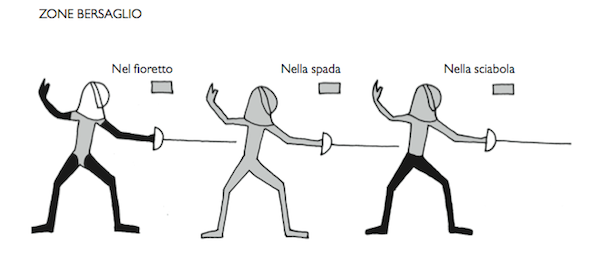
One thing I have never fully appreciated in fencing competitions is the delay , the accepted delay between the hit that hits and the opponent’s hit that arrives immediately after and which, in fact, is not considered decisive for the purposes of the score.
Let me explain better, because the point here is fundamental.
In competitive fencing, if a fencer strikes first and the opponent responds a fraction of a second later, that second strike is often ignored or considered irrelevant.
The point is awarded to whoever touched first, based on:
- priority
- time
- arbitral interpretation
From a sporting point of view it is consistent.
From the point of view of armed reality , it is a huge problem.
That delay – which may seem insignificant on a platform, with sporting weapons, protection and a referee – in real life is enough time to injure, maim or kill .
With a real blade:
- there is no such thing as a “harmless half-second”
- There is no such thing as a “blow that comes later but doesn’t count”
- there is no such thing as “finished action”
If I hit and you hit me right back , it doesn’t matter who started it.
It matters that we both got hit .
And this is where the rift arises between:
- sports logic
- survival logic
Fencing, by regulatory necessity, must stop time .
Reality doesn’t.
In reality:
- the body does not stop
- the gun does not turn off
- damage does not wait for a judge’s decision
What in sports is seen as a technical detail, in real combat is the difference between coming out on your feet or collapsing after a few meters .
And this is why I contest the concept of delay not as a sport fencer , but as a person who thinks in terms of self-defense and real use of weapons.
Why that delay:
- mentally train yourself to accept the return blow
- normalizes the concept of “I’ve touched so much before”
- builds a false sense of security about initiative
With a blade, touching first doesn’t save you .
It saves you not being touched at all .
And if your training – even unintentionally – teaches you that you can afford that extra half-second, then you are training a death window , not a skill.
This does not make fencing a bad sport.
It makes it wrong to transfer it 1:1 into reality .
With weapons, time is never stopped.
And the blow that “comes after” is often the one that matters most.
Who hits whom? The priority
If both fencers land a hit at the same time, who gets the point?
To solve this problem, in foil and sabre there is the rule of priority: the duelist who attacks first has priority, and generally wins the point .
The defender can gain priority and become the attacker if the opponent’s strike misses, but he must exercise it quickly or he loses it.
If it is not possible to establish who has priority, the point is not awarded.
In épée, where priority does not exist, if both players hit each other simultaneously within one twenty-fifth of a second, the point is awarded to both, unless the score is tied and one point short of victory: in this case, the point is awarded to neither.
This sporting approach of hitting each other simultaneously in reality can mean that both opponents have impaled each other and the hope of one or the other is that the injury suffered is not serious.

Why this approach?
Perhaps someone considered this delay sufficient to block an opponent?
When you train with your bare hands but even more so with weapons you must always consider the exit from your attack.
With your bare hand, if you hit your opponent, his eventual successful blow might be empty even if it hits, causing no or very limited damage, but if he has a knife or machete in his hand, this blow, even if it misses the target, can cause incredible damage.
Now you cannot expect to do proper gunwork if you do not properly consider your position and posture after you hit or miss the target.
You must never be with weapons !

Being touched with weapons means being injured or killed and you have to get used to trying during weapons training to never be touched even in play, is it complex?
I don’t even have to answer you!
It’s very complex, as you can understand by yourself you are about to enter the Matrix.
Why am I telling you this?
Because you are about to enter one of the most mysterious and controversial methods of combat that man has created, the use of weapons and in particular edged weapons.
Unfortunately, the news is full of episodes of violence using one of the most common tools in the world: the knife.
As you may have read, this weapon is a powerful equalizer and men of superior strength, expert combat sports fighters, boxers, etc. have unfortunately ended up in this Matrix where they were seriously injured if not killed.
This should make you think because these were not defenseless people, but real fighters and yet the cutting weapon left them no escape.
Why?
First of all, knife attacks, as I’ve already mentioned in a post, often don’t follow the rules of honor, so there’s no duel. It’s a real trap that’s difficult to escape, and that’s where you need to understand the context and its analysis better and more thoroughly, a topic I’ve talked to you about several times.
Clearly, if receiving a punch can give you a chance to react, when it comes to stab wounds, everything becomes increasingly complicated and that is where the educational and psychological approach to the use of weapons must change.
 Typically, a knife attack is an assault with a large number of repeated blows coming from the same side.
No!! It’s not what a knife expert does , but despite the repetitiveness of the gesture, it remains something extremely dangerous, full of a charge of violence and aggression that is the first thing that can surprise you even before the weapon.
Traditional fencing
I often happen to watch fencing matches, it’s something I follow regularly and even if it doesn’t have the three-dimensionality of short fencing (given the use of the piste) it’s something extremely interesting and preparatory but one of the things that has always bothered me is that even though it’s a sport, often the two opponents touch almost simultaneously, awarding the point to the one of the two who touched first. In reality this means two wounded, two dead, or one dead and one wounded, or two wounded.
If you bring this into reality you understand that you have to be much more conservative because hitting each other almost at the same time and both on target means big problems.
Also consider that the only weapon you can use is the sword or foil and you cannot use other parts of your body to attack, you cannot grab and you cannot hit certain parts of your opponent. These limitations make the use of weapons in self-defense one of the most complex fights in the world of martial arts, where obsessive attention to detail is still never enough.
Now this post is not against the sporting approach to fencing which in any case must have rules since it is a sport but a reflection on the fact that one on one with weapons in general is never good .

The psychological approach to the use of edged weapons must be only one towards your opponent:
YOU MUST NEVER TOUCH ME!
Whether it’s a routine, a drill, or sparring, it doesn’t matter, you should never let anyone touch you.
It’s never a game!! Even if you’re using aluminum knives with your training partners.
P.S. Since someone told me, training partners have no political leanings whatsoever, so if you’re thinking something stupid, get it out of your head immediately. Anyone who knows me knows that certain ideological discussions don’t work with me, and I hate anyone who misuses common words for political or personal gain. So, whatever political views you have, you should know that with me you can only talk about ideas, not ideologies. I only answer for ideas!
If it’s good I support you, if it’s bullshit imagine my middle finger in your face, I’m bored by ideological fanatics, even worse if they’re nostalgic, while I adore those who have ideas and projects that go beyond their own little backyard or personal goals.
Now let’s get back to what interests me!
There are many reasons to start practicing the use of weapons, but an important one is related to what you do today: the use of weapons is a turbo for your martial art.
The physical and mental approach of working with the concept of never being touched leads you to emphasize evasive skills to the maximum and an incredible sense of distance that leads to extreme use of footwork, your body position and weight distribution.
Whether you practice combat sports or even more so if you practice self-defense, short fencing is something you should integrate into your training. We’ll discuss the specifics of how much you should include in a separate article.
Start using this cue, listen to my advice.
Stay Tuned! Knife is not a game!
Street Fight Mentality & Fight Sport!
Andrea
🔥 BLOCK – “THE TRAP”
The reality of knife attack is nothing like a duel
If you imagine a knife attack as a one-on-one, head-on, clean confrontation, with time and distance to think things through… you’re watching a movie.
In real life, the blade does not enter the scene as in a competition or in a fencing hall.
It comes in like a trap .
And a trap has one feature: it doesn’t warn you.
Most real stabbings do not arise from a clear “engagement”, but from a dirty and asymmetric sequence where you notice the knife when it is already too late .
This is the first truth you must accept:
A knife attack is often an ambush, not a duel.
🕳️ 1) Ambush: Come when you’re distracted, not when you’re ready
In the duel you are in combat mode :
body ready, distance manageable, attention high.
In the ambush you are in normal life mode :
you talk, you walk, you check your phone, you open the door, you pay at the register, you leave the bar, you’re minding your own business.
And that’s exactly where it comes in.
The blade is not “presented”.
It is injected into the situation.
It often happens like this:
-
distance too short “by chance”
-
one more step while he talks to you
-
hidden hand or “disappearing” hand
-
sudden explosion: quick stabs + forward pressure
-
and you’re already half a second late
In practice: the fight begins when you have not yet realized that it has begun.
👀 2) Pre-contact cues: the hook is normal, the attack is not
The knife rarely appears “from afar”.
First there is almost always a pre-contact that seems normal.
The problem is that many, especially fighters and strikers, look for “ring” signals:
-
guard posture
-
challenging look
-
evident tension
In reality it is often the opposite: apparent calm + setup .
Typical cues (not all at once, but 2–3 are enough):
-
hidden hand (pocket, behind the back, inside the jacket)
-
blind spot : try to move sideways relative to yourself
-
distance that collapses for no reason
-
spoken “hook” : apologies, questions, trivial requests (lighter, time, directions)
-
micro-grooming : touch belt/pocket/handle as a check
-
shoulders that close (blading) while the feet appear “normal”
-
quick scan around (witness/exit check)
-
sudden emotional outburst after a trigger (offense, rejection, humiliation)
Here you have to understand it well:
If you wait for the knife to react, you’re already late.
You have to react to the setup.
😡 3) Emotional violence: the weapon is often secondary to the fury
Many people get fixated on knife technique, on angles, on lines, on “knife fighting”.
But on the street the gun is often just an amplifier of something bigger:
the fury.
There are attackers who don’t “know how to use a knife”… and for this very reason they are extremely dangerous.
Because their mode is:
-
chaos
-
repetition
-
continuous pressure
-
emotional aggression (anger, panic, revenge)
They’re not looking for the big shot.
They try to unload violence on your body.
And here many fighters crash because the brain thinks:
“It’s not technical, so I handle it.”
No.
It’s just the opposite:
Non-technicality is unpredictability , and unpredictability is poison for those accustomed to clean patterns.
🔩 4) Dirty repetition: not “fencing angles”, but seams, pressure, tears
The cliché of the knife attack is: “lunge from above, wide blows.”
Reality is very often uglier and closer to a seam.
Typical attacks in real assaults:
-
sewing machine : repeated short stabs, same hand, same side
-
pressure stabbing : advances and crushes you, to take away your space
-
grab & stab : one hand controls you, the other works
-
slash & crash : cut to open, then enter with the body
-
tearing : the blade enters and then is dragged or retracted poorly (damage worsens)
This repetitiveness is “dirty” because:
-
does not respect distances
-
does not respect lines
-
does not respect elegant timing
-
it feeds on your reaction (you step back and they chase you)
And above all:
It’s not a single action. It’s an assault.
And the assault doesn’t leave you time to “do technique”.
✅ Key point of the block (to be highlighted in the text)
Technique alone is not enough, because technique presupposes one thing:
that you are within a readable context.
If the context is a trap, your primary skill is not “hitting better.”
AND:
-
read first
-
don’t let it collapse on you
-
break line
-
create distance/barrier
-
go out
📦 MICRO-BOX: “Duel vs Assault” (5 short lines)
DUEL (sports / hall)
-
declared
-
symmetrical
-
established distance
-
“clean” space
-
stop/reset
ASSAULT (street / knife)
-
undeclared
-
asymmetrical
-
distance collapses
-
“dirty” space (walls, cars, people)
-
no one stops time
⚠️ Typical mistakes of those who “think like a duel” (to be added immediately after)
-
Waiting to see the blade
-
Accepting the short distance “out of politeness”
-
Thinking that the other is playing fair
-
Looking for the perfect technical solution instead of going out
-
Backing up in line (they chase you and sew you up)
🧠 Mini mental drill (10 seconds, practical)
“TRAP CHECK” (whenever someone gets too close)
-
Hands : Where is the hand? Visible?
-
Angle : Is he looking for my side?
-
Distance : why is it so close?
-
Exit : Where is my exit now?
If you don’t like the answer: move your feet .
Don’t negotiate the distance. Break up immediately.
Perfect.
Below you will find the complete operational module , ready to insert into the post or to extract as a standalone tool (PDF, course slide, handout).
No abstract theory. Signals → words → actions.
🧠 PRE-CONTACT PROTOCOL
Read the trap before it snaps
✅ CUES CHECKLIST – THE 10 CUES THAT REALLY MATTER
They don’t all have to be there.
2-3 of them together are enough to immediately raise the alert level.
-
Hidden hand
In your pocket, behind your back, inside your jacket.
👉 The hand you don’t see is the one you should fear.
-
Distance collapsing for no reason
No real need to get closer.
👉 Anyone who doesn’t respect space is testing the waters.
-
Actively searched for blind spot
He moves sideways as he talks to you.
👉 It’s not nerves: it’s positioning.
-
A look that “scans”
Check around, not yourself.
👉 Check for witnesses, exits, complications.
-
Micro-grooming
Touch belt, pocket, hip, always the same spot.
👉 Weapon check, not tick.
-
Sudden change in emotional tone
From neutral to charged, from calm to aggressive.
👉 Emotional trigger = possible explosion.
-
Shoulders that close (blading)
The body “cuts” while the feet remain still.
👉 He is protecting something and preparing the entrance.
-
Trivial request as a pretext
Lighter, time, cigarette, directions.
👉 It only serves to make you stop.
-
Fixation on you
He doesn’t look at the environment, he only looks at you.
👉 Targeting.
-
Persistence
It doesn’t give up even if you move or close.
👉 It’s not sociality. It’s pressure.
📌 Golden rule:
If you feel the need to “be nice”… you’re already too late.
🗣️ VERBAL SCRIPTS
Simple phrases to manage distance (without escalation)
These sentences are not for discussion , but for:
-
create space
-
test the reaction
-
buy time
-
justify the movement
Use them while moving , never while stationary.
🔹 Level 1 – Neutral / Preventive
-
“Hey, stop right there.”
-
“That’s fine.”
-
“Stay there, thanks.”
-
“Don’t come any closer.”
👉 If the person respects → ok.
👉 If ignored → alert.
🔹 Level 2 – Assertive
-
“I said stop.”
-
“Backwards.”
-
“Don’t come near me.”
-
“Get out of my way.”
👉 Here you are not asking , you are informing.
🔹 Level 3 – Boundary break (before the exit)
-
“Stay back NOW.”
-
“Move away.”
-
“Stop the fuck.”
👉 It also helps prepare witnesses and yourself for action.
📌 Important note
If it continues to advance while you are talking , stop talking .
Move your feet. Now.
🥊 DRILL SCENARIO
Train reading, not heroism
Each drill follows this sequence:
reading → word → movement → exit
🍺 SCENARIO 1 – BAR / LOCAL
Setup
-
Crowded space
-
Noise
-
Short distances
-
Tables as obstacles
Roles
-
A = attacker (without visible weapon)
-
B = defender
Goal of B
-
Recognizing pre-contact
-
Use a phrase
-
Move sideways , not backwards
-
Create a barrier (table, stool, counter)
Trigger
A ignores the first distance request.
Success
-
B goes out of line
-
It is not touched
-
Doesn’t get stuck between furniture
❌ Typical failure
Staying frontal “for politeness”.
🚪 SCENARIO 2 – CONDOMINIUM DOOR / ENTRANCE
Setup
-
Narrow space
-
Nearby walls
-
Zero depth
Roles
-
A = person who “asks for something”
-
B = is entering or exiting
Goal of B
-
Don’t get closed between the door and the person
-
Stop the entrance
-
Move diagonally towards the light exit/street
Recommended script
-
“Stop right there.”
-
“Do not enter.”
Success
-
B remains mobile
-
Keeps light and output
-
It doesn’t get crushed
❌ Typical failure
Move back in line inside the gate.
🅿️ SCENARIO 3 – PARKING / OPEN SPACE
Setup
-
Open space
-
Few people
-
Cars as barriers
Roles
-
A = attacker who accelerates the distance
-
B = defender in motion
Goal of B
-
Using the car as a mobile shield
-
Don’t stay static
-
Always keep an escape route
Focus
-
Corners
-
Timing
-
Circular movement
Success
-
No contact
-
Broken line
-
Distance restored
❌ Typical failure
Stop and “see what he does”.
🧠 MANDATORY DEBRIEF (30 seconds)
After each run:
-
When did I realize something was wrong?
-
Did I talk while I was moving ?
-
Where did I lose distance?
-
Did I stay even half a second too long?
If you don’t debrief, you repeat the mistake .
⚠️ FINAL RULE OF THE PROTOCOL
The blade doesn’t start when it comes out.
It starts when someone enters where they shouldn’t.
Whoever reads pre-contact survives.
Those who wait for technology often don’t.
Knife is not a game.
Street Fight Mentality.
🧠 PRE-CONTACT
The blade comes before the blade
The knife does not appear out of nowhere .
Before the blade comes out, the body has already spoken.
Before the weapon is used, the intent has already been communicated .
The problem is that:
-
many can’t read
-
others read but rationalize
-
still others see… and don’t want to believe
This is the key point:
If you wait until you see the blade, you’re already in the wrong part of the timeline.
The real work of self-defense begins before contact , when you still have room for:
-
move
-
create distance
-
break the other’s arrangement
-
to go out without a fight
This is detective work applied to the human body .
🔍 THE SIGNALS THAT REALLY MATTER (PRE-CONTACT CUES)
Don’t look for “the guard”.
Don’t look for “the fighting stance.”
Look for inconsistencies .
✋ 1) “Dead” or hidden hand
A hand that:
-
he doesn’t gesticulate
-
does not accompany speech
-
it disappears behind the back, in the pocket or under the jacket
👉 The hand that doesn’t participate is the one that works.
On the street, symmetry is reassuring .
The asymmetry no.
🧍 2) Shoulder blading (shoulders that close)
The body is slightly “cut”:
-
one shoulder forward
-
one back
-
rotated torso
While:
-
the face remains apparently normal
-
the voice is neutral
👉 It is not martial posture.
It’s protection + preparation .
👀 3) Quick scanning
Look that:
-
it doesn’t stay on you
-
it goes behind, to the sides, to the exits
-
come back to you
👉 He’s checking:
-
witnesses
-
obstacles
-
possibility of action
Whoever really talks to you looks at you .
Whoever prepares something looks around .
🚶 4) Zigzag approach
It doesn’t go straight in.
It makes small lateral movements as it approaches.
👉 Are you looking for:
-
corner
-
dominant side
-
your blind line
This is positioning , not nervousness.
📉 5) Distance that closes “too much” with an excuse
“Excuse me…”
“Hey bro…”
“Just a moment…”
But in the meantime:
-
it’s too close
-
keep moving forward
-
ignore micro-stop signs
👉 Violating distance is already aggression.
The blade comes next.
🧥 6) Grooming gestures
Repeated micro-movements:
-
touch the belt
-
jacket system
-
always touches the pocket in the same spot
👉 It’s not a tic.
It’s a functional check .
The body checks what it will use.
😤 7) Change breathing / jaw / gaze
Before the action you often see:
-
breathing that accelerates or stops
-
jaw clenching
-
jaw that moves sideways
-
gaze that becomes “empty” or fixed
👉 It’s the transition from social to predatory .
The body goes into action mode before the rational mind .
🧠 FATAL MISTAKE TO AVOID
Many notice these signs… and then think:
“Maybe I’m wrong.”
“I don’t want to sound paranoid.”
“Let’s wait a moment.”
That half-second is exactly what a blade needs.
👉 Prevention only works if you agree to take action before you know for sure.
Better to seem rude.
Better to look weird.
Better to sound paranoid.
How hurt.
📌 OPERATING RULE (TO BE HIGHLIGHTED)
If the body tells a story that words don’t confirm,
Believe in your body. Always.
The knife comes out after .
The decision must be made first .
🔑 PRACTICAL TRANSLATION
-
Don’t look for the blade → look for the intention
-
Don’t wait for the attack → break the distance
-
Don’t argue → move your feet
-
Don’t justify yourself → protect yourself
This is not paranoia.
It’s literacy in real violence .
⚠️ BLOCK CLOSURE
The blade is not born in the hand.
It originates in the body.
It is born in space.
It is born in the distance you allow .
Who learns to read pre-contact:
-
fights less
-
survives longer
-
he doesn’t need to prove anything
Knife is not a game.
Street Fight Mentality.
🧠 PURE READING DRILL
This is the most underrated and most powerful drill ever : zero punches, zero ego, just reading .
This is where you separate those who fight from those who understand first .
No fight. No punches. No excuses.
If you can’t read, you’ll always be late to the fight.
This drill is to take away the illusion that you will “react in time”.
🎯 DRILL GOAL
Train:
-
pre-contact reading
-
recognition of intention
-
decision before the attack
-
preventive movement
👉 There is no fighting.
👉 Don’t hit.
👉 You don’t win.
It is evaluated whether you understood first .
🧩 GENERAL STRUCTURE
-
Intensity: low
-
Speed: real
-
Stress: psychological
-
Feedback: immediate
⛔ If someone starts “doing technique”, the drill has failed.
🧠 DRILL 1 – “READ & MOVE” (BASIC)
Setup
-
Couple A (reader)
-
Couple B (actor)
-
Free, simulated urban space
Rules
-
B never attacks
-
B can:
-
get closer
-
speak
-
change angle
-
use pre-contact cues
-
-
He doesn’t speak
-
A can only move
A’s goal
-
Recognizing when something changes
-
Move before things get ugly
👉 Don’t wait for certainty.
👉 Move on informed feeling .
End of the round
-
B says:
“Now I would have attacked.”
-
If A had already moved → ✅
-
If A was stationary → ❌
📌 This drill kills the habit of “waiting too long”.
🧠 DRILL 2 – “FREEZE & POINT” (PURE READING)
Setup
-
Group of 3 to 6 people
-
1 single “potential attacker” (B)
Rules
-
Everyone walks normally
-
B uses 2–3 pre-contact cues
-
A (designee) can say STOP at any time
When A says STOP:
-
Everyone stops
-
A must indicate:
-
the dangerous hand
-
the corner
-
the distance
-
-
B confirms or denies
👉 Here you train eye + brain , not reflexes.
🧠 DRILL 3 – “FALSE POSITIVES” (ANTIPARANOIA)
Why it is essential
Many are afraid of “misreading”.
This drill is about trusting the process , not the ego.
Setup
-
B performs ambiguous but harmless behaviors
-
No weapon, no intention
A’s goal
-
Moving without justifying oneself
-
Accepting the “false alarm” as a success
📌 Key rule:
Moving without a reason is better than staying with the wrong reason.
🧠 DRILL 4 – “NO HANDS, NO WORDS” (ADVANCED)
Setup
-
Total silence
-
No words
-
Just movement
Rules
-
B communicates only with the body
-
A must:
-
keep your distance
-
break corner
-
don’t get locked out
-
Success
-
No invasion of critical distance
-
A remains mobile
-
No freeze
👉 This drill teaches you that the body speaks before the mouth .
🧠 DRILL 5 – “EXIT INSTINCT” (MATRIX MODE)
Setup
-
Space with 2–3 possible exits
-
B enters ambiguously
A’s goal
-
Identify the exit first
-
Move without looking at her
-
Don’t wait for the engagement
📌 If you look at the exit → you’re late.
You have to know where it is without thinking.
🧠 MANDATORY DEBRIEF (THIS IS THE DRILL)
After each round, 30–60 seconds :
-
When did I feel something was wrong?
-
What made me hesitate?
-
Did I move before or after?
-
Did I seek certainty or did I accept uncertainty?
👉 If you don’t debrief, you’re just walking.
⚠️ COMMON ERRORS (BLOCK NOW)
❌ Waiting for the “perfect signal”
❌ Seek verbal confirmation
❌ Stop for politeness
❌ Thinking “it won’t happen anyway”
❌ Turning drill into game
🧠 MOTHER RULE OF READING
Reading is a way of not fighting.
If you are fighting, you have already failed this stage.
Practice pure reading:
-
drastically lowers the risk
-
reduces the number of collisions
-
It lets you enter the Matrix before anyone else
Knife is not a game.
Street Fight Mentality.
🔪 INTEGRATION WITH DRILL KNIFE / MARKER
Here we make the definitive leap in quality : from reading to reality testing .
The marker is not used for “fighting”, it is used to dismantle illusions .
From reading to the truth about your body
The marker doesn’t lie.
He has no ego.
He has no respect for your technique.
If you’ve been touched, you’ve been hurt .
End of discussion.
🎯 GOAL OF INTEGRATION
Connect directly:
-
pre-contact reading
-
early decision
-
exit
-
real physical consequences
👉 You don’t train fighting here.
👉 Practice when NOT to fight and what happens when you arrive late.
🧩 3-LEVEL STRUCTURE (MANDATORY)
LEVEL 1 – PURE READING (already seen)
-
No visible weapons
-
Only cues
-
Preventive movement
👉 If you fail here, you do not advance to level 2 .
LEVEL 2 – LATENT BLADE (hidden pen)
Setup
-
B has a dark marker (latent blade)
-
Hidden hand
-
Normal verbal language
Rules
-
B can:
-
get closer
-
use excuses
-
change angle
-
-
B does not attack until A:
-
freeze
-
he retreats badly
-
loses exit
-
Trigger
When B decides: “now he would have left”
→ strikes only once , quickly.
A’s goal
-
Move first
-
Breaking distance
-
Don’t let yourself be touched
Assessment
-
No sign → ✅
-
Sign on forearm → ⚠️
-
Sign on torso/neck → ❌
👉 Here you can understand if your reading is really working .
LEVEL 3 – REAL AMBUSH (controlled stress)
Setup
-
Simulated urban environment
-
Real distraction (chat, homework)
-
B enters without “clean signals”
Rules
-
No warning
-
No countdown
-
No duel
A can ONLY do
-
move
-
use barrier
-
go out
❌ Forbidden:
-
try to disarm
-
exchange
-
stay “to see”
Fine drill
-
3–5 seconds max
-
Immediate stop
🩸 WOUND MAPPING (MUST BE RUTHLESS)
After each run, photo or mirror .
|
Marked area |
Real translation |
|---|---|
|
Hand / fingers |
loss of grip, item drop |
|
Forearm |
tendon damage |
|
Shoulder |
loss of mobility |
|
Torso |
life-threatening injury |
|
Neck |
game over |
👉 No “but it was light”.
A line is a blade.
🧠 STRUCTURED DEBRIEF (THIS IS GOLD)
Mandatory questions:
-
When did I miss reading?
-
Which cue did I ignore?
-
Why didn’t I move earlier?
-
Where could I have gone out?
-
What will I do differently next time?
📌 If you don’t know the answer, repeat the drill .
⚠️ TYPICAL MISTAKES THAT THE MARKER UNMASKS
❌ “I thought I had time”
❌ “It didn’t seem dangerous”
❌ “I wanted to see what he did”
❌ “I sought control”
❌ “I trusted the technique”
👉 All mental errors , not technical ones.
🧠 FINAL RULE (TO BE CARRIED INTO THE BRAIN)
The marker is used to remove your lies.
If you are marked, you are dead or wounded.
Point.
If your strategy only works when the blade is declared ,
it does not work.
If it works first , then you’re doing it right.
🔚 HOW TO USE IT FOR TRAINING
This block goes:
-
after Pre-Contact
-
before the technique
-
before any disarmament
Why:
First read → then avoid → then (maybe) fight.
Knife is not a game.
Street Fight Mentality.
🧠🔪 INSTRUCTOR VERSION
Knife Marker Training – Scoring System & Progression Levels
This is not an advanced variant .
It’s the honest version of edged weapons training.
Here we do not evaluate:
-
who is more technical
-
who is more aggressive
-
who “wins the exchange”
Here we evaluate who SURVIVES without being touched .
🎯 BASIC PRINCIPLE (TO BE EXPLAINED TO STUDENTS IMMEDIATELY)
You don’t train with a marker.
Do auditing.
The marker:
-
certifies the errors
-
unmasks illusions
-
destroys the ego
If one does not accept this principle → he is not ready for work with weapons .
🧮 SCORING SYSTEM (SIMPLE, RUTHLESS)
📊 BASE SCORE (EACH RUN)
|
Outcome |
Score |
Real translation |
|---|---|---|
|
0 signs |
+2 |
Clean exit |
|
1 peripheral sign (forearm, hand) |
0 |
Functional wound |
|
1 torso / shoulder sign |
–2 |
Serious injury |
|
Neck / face / multiples |
–4 |
Game over |
|
Exchange (both scored) |
–3 |
Suicidal mentality |
📌 Instructor note
The score is not averaged .
A single –4 in a session = technical fail .
🧱 PROGRESSION LEVELS (NON-NEGOTIABLE)
🔰 LEVEL 0 – AWARENESS (ACCESS)
Prerequisite
-
Accept that being touched = mistake
-
It does not justify the signs
-
He stops at the debrief without controversy
❌ Whoever discusses the marker leaves the drill
🟢 LEVEL 1 – READING & DISTANCE
Setup
-
Hidden marker
-
No direct attack declared
Objective
-
Exit before contact
Promotion
-
3 consecutive runs with 0 scores
-
No freeze reaction
🟡 LEVEL 2 – ACTIVE LATENT BLADE
Setup
-
Sudden single attack
-
Distance closed with pretext
Rules
-
A single offensive action
-
3 seconds max
Promotion
-
Average score ≥ +1
-
Zero hits to torso/neck
🟠 LEVEL 3 – URBAN AMBUSH
Setup
-
Scenery (gate, bar, parking lot)
-
Real distraction
-
No countdown
Assessment
-
Reading
-
Exit timing
-
Use of the environment
Promotion
-
At least 5 runs
-
No –2 or –4
🔴 LEVEL 4 – STRESS & DECISION
Setup
-
Fatigue
-
Noise
-
Cognitive multi-task
Objective
-
Don’t “win”
-
Decide first
Criterion
-
If he reacts late → he fails
-
If he comes out even without hitting → promoted
🩸 WOUND MAPPING (MANDATORY)
Each student must:
-
photograph the signs
-
note area + cause
-
answer 3 questions
📋 POST-RUN QUESTIONS
-
What sign did I ignore?
-
Where did I lose distance?
-
Why didn’t I leave earlier?
👉 If he doesn’t know the answer = repeat the level
🧠 KEY METRICS FOR INSTRUCTORS (NON-TECHNICAL)
Don’t look:
-
speed
-
aggression
-
aesthetics
Look:
-
how soon it moves
-
how little remains
-
how much is he willing NOT to enter
📌 He who always seeks engagement is not reliable with weapons .
⚠️ ERRORS THAT BLOCK PROGRESSION
❌ Minimize the signs
❌ “But it was just a scratch”
❌ Seeking disarmament as a reflex
❌ Accept the exchange
❌ Stay to “close”
👉 All mental fails , not technical.
🧠 GOLDEN RULE FOR THE INSTRUCTOR
If you reward courage, you are practicing the funeral.
If you press exit, you are practicing survival.
🏁 FINAL CERTIFICATION CRITERIA (UNOFFICIAL, BUT REAL)
A student is ready when:
-
avoid before reacting
-
comes out without hitting if needed
-
does not justify mistakes
-
consider the 0–0 a success
🔪 PHRASE TO ENGRAVED IN THE GYM
If you’re marked, you’re cut.
If you’re cut, you failed.
Knife is not a game.
Street Fight Mentality.
📊 DECISION TABLE
GO / STAY / CRASH / EXIT
This table is not used to choose the technique ,
It helps you avoid choosing the wrong one .
|
AREA |
KEY SIGNALS |
CORRECT OPTION |
WHY |
TYPICAL ERRORS |
|---|---|---|---|---|
|
🟢 Green |
Wide distance, clear path, weapon not visible |
GO |
Move before the threat closes |
To stand by and observe |
|
🟢 Green |
Open environment, clear exit |
EXIT |
Avoid everything without contact |
Ego (“I don’t run away”) |
|
🟡 Yellow |
Hidden hand, distance collapsing |
GO |
Break the momentum before the ambush |
Wait for confirmation |
|
🟡 Yellow |
Blind spot, verbal pressure |
EXIT |
The knife is born here |
Talking too much |
|
🟡 Yellow |
Minimal but readable space |
CRASH (only if required) |
Break the action before it starts |
Freeze |
|
🔴 Red |
Contact, active blade |
CRASH → EXIT |
There is no long-term control |
Search domain |
|
🔴 Red |
Clinch with blade |
EXIT (as soon as possible) |
Every second = wounds |
Stay “to fight” |
|
❌ All |
Confusion, indecision |
FAIL |
The knife decides for you |
Thinking too much |
📌 Golden Rule
STAY is almost always an illusion.
If you stand still, you are giving the blade time.
🥊 DEDICATED DRILLS FOR EACH AREA
No choreography.
Just decision + space .
🟢 DRILL GREEN ZONE –
Early Exit Drill
Objective
Learning to move before the distance collapses.
Setup
-
Partner A neutral
-
Partner B observes
-
Open space
Rule
-
A approaches normally
-
B must GO or EXIT before contact
❌ Forbidden:
-
Waiting for the knife
-
Talking too much
✅ Success:
-
No contact
-
Early decision
🟡 DRILL YELLOW ZONE –
Pre-Contact Reading
Objective
Read before extraction.
Setup
-
Hidden marker
-
Verbal pretexts
-
Ambiguous approach
Rule
-
Immediate stop if B closes distance or changes angle
-
B must decide within 2 seconds
📌 Rates:
-
Timing decision
-
Voice use
-
Lateral movement
🟡 DRILL YELLOW ZONE –
Crash or Go
Objective
Choose CRASH only if forced .
Setup
-
Narrow space
-
It closes quickly
-
Knife comes out as a surprise
Rule
-
B can CRASH only to break and get out
-
Stop as soon as distance is created
❌ Fail:
-
Staying after the crash
-
Seeking control
🔴 DRILL RED ZONE –
Damage Control
Objective
Go out even if you’re already in .
Setup
-
Clinch
-
Active marker
-
Minimum space
Rule
-
No victory
-
It only counts:
-
exit time
-
number of signs
-
📌 Mandatory debrief.
🔴 DRILL MATRIX –
No Hero Drill
Objective
Kill the ego.
Setup
-
Random scenario
-
Initial distraction
-
No countdown
Rule
-
0–0 = SUCCESS
-
1–1 = FAIL
-
Exit without hitting = PASSED
🧠 FINAL SUMMARY (TO BE RECORDED)
-
Distance is not a state
-
It’s an ongoing decision
-
The knife wins when you hesitate
-
The Yellow Zone is the real battlefield
-
Technique is only useful if it takes you out
FINAL SENTENCE
Distance is time.
Time is blood.
Knife is not a game.
Street Fight Mentality.

🧩 EVALUATION TOOL
This is pure instructor gold , because it turns a “cool” concept into a tool that judges without excuses .
Below you will find ATTACK / PERMANENCE / EXIT transformed into an OPERATIONAL EVALUATION TOOL , usable for:
-
knife sparring
-
drill scenario
-
marker
-
internal exams
-
post-run self-criticism
ATTACK / STAY / EXIT
He does not judge the one who hit.
Judge who managed the risk.
📊 EVALUATION SHEET (CORE)
1️⃣ ATTACK –
How did you get in?
|
CRITERION |
KEY QUESTION |
OUTCOME |
|---|---|---|
|
Brevity |
Did the attack last < 1 second? |
✅ ⚠️ ❌ |
|
Corner |
Did you go offline? |
✅ ⚠️ ❌ |
|
Need |
Was it really necessary to enter? |
✅ ⚠️ ❌ |
|
Emotional control |
Did you attack without “force”? |
✅ ⚠️ ❌ |
📌 INSTRUCTOR’S NOTES
-
❌ = “ego driven” attack
-
⚠️ = technically valid but risky attack
-
✅ = surgical entry
2️⃣ PERMANENCE –
How long did you stay where you shouldn’t have been?
⏱️ STAY TIME (estimated)
☐ < 1 second
☐ 1–2 seconds
☐ > 2 seconds
|
CRITERION |
KEY QUESTION |
OUTCOME |
|---|---|---|
|
Time |
Have you left the bare minimum? |
✅ ⚠️ ❌ |
|
Immobility |
Have you “stopped” even for a moment? |
⚠️ ❌ |
|
Exchange |
Have you accepted the return? |
❌ |
|
Signs |
Have you been touched? |
❌ |
📌 NON-NEGOTIABLE RULE
Any stay > 2 seconds = ❌ automatic
3️⃣ EXIT –
How did you survive?
|
CRITERION |
KEY QUESTION |
OUTCOME |
|---|---|---|
|
Line |
Did you break the gun line? |
✅ ⚠️ ❌ |
|
Corner |
Did you exit sideways/diagonally? |
✅ ⚠️ ❌ |
|
Barrier |
Did you use the environment/body as a shield? |
✅ ⚠️ ❌ |
|
Final zone |
Are you back in the Green Zone ? |
✅ ⚠️ ❌ |
📌 BRUTAL TRUTH
If you haven’t returned to the Green Zone, the action is incomplete.
🧮 FINAL SCORE (SIMPLE AND RUTHLESS)
|
OVERALL OUTCOME |
MEANING |
|---|---|
|
✅✅✅ |
Clean Action – SURVIVAL |
|
✅⚠️❌ |
Risky action – TO BE CORRECTED |
|
❌❌❌ |
Wrong Mindset – RESET |
|
❌ (any sign) |
Wound → FAIL |
📌 Note
A single ❌ in PERMANENCE weighs more than two ❌ in the other blocks.
🧠 HOW TO USE IT IN THE GYM (INSTRUCTORS)
🥊 DURING SPARRING
-
Stop immediately after action
-
Hot evaluation
-
No discussions
📋 POST-DRILL
The student must answer orally:
-
Where have I stayed too long?
-
Why didn’t I leave earlier?
-
What would I do exactly the same?
👉 If he doesn’t know how to answer = repeat the drill
⚠️ ERRORS THAT THE TOOL UNMASKS IMMEDIATELY
❌ Long but “beautiful” attacks
❌ Hit and stay
❌ Online releases
❌ “I almost…”
❌ Technical justifications
This tool kills the ego .
And that’s why it works.
🪧 VERSION (SUMMARY)
ATTACK FAST
STAY SHORT
EXIT CLEAN
If one of the three is missing → FAIL
🧠 OPERATIONAL MANTRA
The attack is worth nothing
if he doesn’t take you out.
Knife is not a game.
Street Fight Mentality.
⚠️ THE MYTH OF DISARMAMENT
Disarmament is one of the most overused, misunderstood , and misrepresented concepts when it comes to knives. Let’s be clear: disarmament is not a strategy ; it’s a rare event that occurs as a result of something else. Without control of the armed arm, without a dominant position, without a favorable angle, and without breaking the balance, disarmament is pure fantasy. In reality, there’s no such thing as “I’ll take the knife away from you with technique X” while the other person cooperates or stands still. There’s a body that pushes, pulls, snatches, retracts, switches hands, and strikes while you still think you’re “in control.”
The key point is this: when a disarm works, it’s because you’ve already won elsewhere . You’ve won on distance, angle, structure, timing, environment, or surprise. Disarming isn’t the goal; it’s an accidental consequence of a situation already compromised for the attacker. And it’s almost never “clean”: it slips, falls, breaks, is lost for a moment. If your training revolves around disarm as a happy ending, you’re training a dangerous illusion. With a knife, you’re not trying to remove the weapon. You’re trying to avoid being hit and get out alive . If the weapon falls, great. But that wasn’t the plan.
👉 This block serves only one purpose:
cut through illusions before they cut through the reader.
🧰 IMPROVISED WEAPONS & BARRIERS
The other real-world equalizer
The knife is an equalizer.
But in urban reality there is a second equalizer that almost no one seriously trains: objects .
Not because they “become weapons”, but because they become time .
And with a blade, time is more important than technique .
A key distinction must be made here, which separates those who survive from those who improvise:
👉 object ≠ weapon
👉 object = barrier
🧱 The concept of barrier (not weapon)
In real knife fighting, the goal is not to hit better , but to interrupt the continuity of the attack .
A barrier serves to:
-
break the blade line
-
create artificial distance
-
to absorb or deflect blows
-
force the attacker to reposition himself
👉 Every repositioning is time gained .
👉 Every second gained is blood saved .
If you’re thinking, “I’ll hit him with this,” you’re already on the wrong track.
You have to think: “this DOESN’T AFFECT ME” .
🧳 Common objects, real functions
Backpack
-
Flexible shield
-
Absorbs cuts and thrusts
-
It can be pushed, interposed, thrown
-
Excellent for creating a mobile barrier
Jacket / Sweatshirt
-
Wrapped around the forearm → passive protection
-
Used as a “sail” to disturb vision and timing
-
It doesn’t block, it interferes
Chair
-
Excellent barrier
-
Keep your distance
-
Forces the attacker to turn around
-
Buy precious seconds for EXIT
Bottle
-
Not a “weapon”, but a distraction
-
Can affect face/hand
-
It’s used to break the rhythm, not to win
Belt
-
Extension
-
Distance control
-
Gun Hand Disorder
-
Never thought of as a “fix-all” whip
Umbrella
-
Rigid structure
-
Great for saving space
-
Pressure on the arm, shoulder, face
-
It works because it prolongs the problem , not because it “hurts”
📌 Keynote:
None of these items make you invincible.
They all make you less easy to hit.
⏱️ Buy time > Win
This is the most important mental shift.
In the real world:
-
you don’t have to dominate
-
you don’t have to disarm
-
you don’t have to “finish”
You have to:
-
buy time
-
create space
-
go out
Every object used well:
-
reduces attack speed
-
increase your decision window
-
shift the fight in your favor before contact
👉 It’s pure Urban Survival.
Not martial aesthetics.
Not gym technique.
⚠️ Common mistakes (to be cut out immediately)
❌ Search for the KO with the item
❌ Trust the resistance of the material
❌ Stay still behind the barrier
❌ Thinking “I’m fine now”
The barrier is not security , it is transition .
It’s for leaving , not staying.
🧠 Operational summary
-
The knife equalizes violence
-
Objects equalize time
-
The barrier wins over the weapon
-
He who buys time, buys life
🪧 Mantra to remember
I’m not trying to hit you.
I’m trying not to be there.
Knife is not a game.
Street Fight Mentality.
🧪 THE “MARKER PEN TEST” – SERIOUS VERSION
It’s not sparring. It’s a reality check .
The Sharpie Test is probably one of the most honest, unforgiving, and revealing tools you can use in knife work.
Precisely for this reason it is almost always trivialized , transformed into a game, into a colorful sparring match good for social media.
Not here.
Here we treat it for what it really is:
👉 a protocol to check your ability to survive .
🎯 TEST OBJECTIVE
Do not rate:
-
technique
-
aggression
-
“who won”
But check:
-
how much you get hit
-
where you get hit
-
why do you get hit
-
how much you remain in the distance
The marker does not simulate the knife .
The marker certifies the errors .
🧱 BASIC RULES (NON-NEGOTIABLE)
-
Every sign = wound
-
No justification
-
Immediate stop at critical sign
-
Mandatory debrief
-
No pursuit of disarmament
📌 If one of these rules is violated → the test loses value.
📈 PROGRESSIVE INTENSITY (4 LEVELS)
The test doesn’t start off strong .
Honest part .
🔰 LEVEL 1 – PURE READING (NO COMBAT)
Setup
-
Hidden marker
-
No direct attack
-
Natural approach
Objective
-
Going out without contact
-
Recognizing pre-contact cues
Assessment
-
If you are marked → ❌ serious
-
If you leave early → ✅
📌 Here you understand if you see before the blade .
🟢 LEVEL 2 – SINGLE ATTACK
Setup
-
A single sudden attack
-
Moderate speed
-
Medium space
Objective
-
Evasion
-
Creating space
-
Exit
Typical error
-
Counter-attack instead of exiting
📌 One sign = drill failure.
🟡 LEVEL 3 – REPEAT ATTACK (REALISTIC)
Setup
-
Multiple attacks
-
Irregular rhythm
-
Emotional pressure
Objective
-
Reduce wounds
-
Get out as soon as possible
📌 You don’t “win” here.
Here you limit the damage .
🔴 LEVEL 4 – URBAN SCENARIO
Setup
-
Initial distraction
-
Environment (gateway, bar, parking)
-
No countdown
Objective
-
Early decision
-
Use of environment/barriers
-
EXIT
📌 0–0 = total success
📌 1–1 = mental failure
🩸 HOW TO EVALUATE A “WOUND”
This is where the professionals separate from the storytellers.
🔴 CRITICAL AREAS (IMMEDIATE STOP)
-
Neck
-
Throat
-
Abdomen
-
Groin area
-
Low back
👉 Game over.
We don’t continue. We analyze.
🟠 SERIOUS AREAS
-
Chest
-
Shoulder
-
Flanks
-
Inner thigh
👉 Compromising wound.
The subject does not “win” anyway .
🟡 FUNCTIONAL AREAS
-
Hand
-
Forearm
-
Biceps
-
Calf
👉 Wound that:
-
reduces capacity
-
high grip
-
change the strategy
📌 This is also not acceptable , but it is informative.
📋 DEBRIEF – THE HEART OF THE TEST
Without a debrief, the test is useless.
Each run must end with 3 mandatory questions:
-
When did I lose distance?
-
What sign did I ignore?
-
Why didn’t I leave earlier?
❌ Vague answers = retest
❌ Justifications = stop training
🧠 WHAT THE TEST REALLY TELLS YOU
-
If you agree to be hit
-
If you stay too long
-
If you attack out of ego
-
If you confuse courage with survival
The marker doesn’t lie .
And he has no mercy for those who tell themselves stories.
⚠️ ERRORS THAT INVALIDATE THE TEST
❌ Turn it into a competition
❌ Laughing at the signs
❌ “It was just a scratch”
❌ Continue after critical hit
❌ Seek disarmament as a goal
If you do this, you are not testing .
You’re playing.
🧠 FINAL TRUTH
The Sharpie Test isn’t about making you feel good.
It’s to show you how vulnerable you are .
And that’s why it works.
PHRASE TO BE ENGRAVED
The marker doesn’t judge.
It records.
Knife is not a game.
Street Fight Mentality.
🧠 STRESS & PERCEPTION
Why can’t you see the blade (even when it’s right in front of you)
When stress explodes, the problem is not the technique .
It’s your nervous system.
In a sudden knife threat, four inevitable phenomena come into play:
-
Tunnel vision
Your field of vision narrows. You see the face, the chest, the intention.
You can’t see the hand . The blade remains outside the frame.
-
Fine-motor skills drop
Finesse skills collapse. Grips, “precise” disarms, and micro-gestures disappear.
Only crude and primitive movements remain .
-
Time distortion
Time speeds up or slows down in a distorted way.
You think you have “a moment”, but in reality you are already late.
-
Freezing
The body stops while the mind tries to understand.
It’s not cowardice: it’s cognitive overload .
👉 Final result:
The blade isn’t invisible. It’s you who can no longer process it.
And that’s why “I didn’t see her” is a recurring phrase in royal records.
⏱️ ANTI-TUNNEL MICRO-PROTOCOL (10 SECONDS)
It’s not meditation.
It’s functional reset under pressure.
1️⃣ BREATH (2–3 sec)
Exhale long , mouth open.
Not to calm you down: to unlock the system .
Exhaling reactivates peripheral vision.
2️⃣ SCAN (2 sec)
Visual micro-scan:
-
hands
-
belt
-
immediate environment
Don’t look for details.
Look for anomalies .
3️⃣ MOVE FEET (2–3 sec)
Move your feet before you move your hands .
Even a side step breaks the freezing.
Physical movement restarts the decision.
4️⃣ EXIT ANGLE (2 sec)
Not back in line.
Angle + distance .
If you don’t come out in these seconds,
the body will go into pure reactive mode.
🧠 WHY THIS WORKS
Why:
-
does not require fine-motor
-
It does not require technique
-
it doesn’t require “courage”
It only requires a simple , trainable, repeatable sequence .
👉 It’s not about winning.
👉 It helps you see again .
⚠️ COMMON MISTAKE
Wait until you “feel ready”.
With stress:
-
clarity does not arrive
-
calm does not come
-
the blade yes
The protocol does not eliminate stress.
It allows you to function despite stress .
🧠 KEY PHRASE
You don’t train to see better.
Train to see even when your brain collapses.
Knife is not a game.
Street Fight Mentality.

🧷 LEGAL BOX (MINIMAL, BUT SMART)
Let’s talk like adults, without playing lawyers.
-
The knife is always a huge escalation. Even when you “didn’t mean to hurt.”
-
In self-defense, your story must hold up in front of the police, the magistrate, and experts.
-
Serious injuries change everything : criminal investigation, trial, post-event stress, guilt, financial consequences.
-
Context matters more than technique : where you were, why you were there, whether you could leave.
-
Avoiding, de-escalating, exiting is not cowardice: it is the most legally defensible choice.
-
Training isn’t about seeking out confrontation , it’s about reducing damage when you can’t avoid it.
👉 This work does not incite violence .
It helps to understand how easy it is to ruin your life when a blade comes into play.
Knife is not a game.
Street Fight Mentality.
✅ CLOSURE – TRAINING PATH
This isn’t the end of the article. It’s the beginning of the journey.
If you’ve made it this far, you’ve understood one fundamental thing:
With weapons, knowledge isn’t enough. You have to structure.
Here are three operational entry points , based on who you are and what you train.
🥊 IF YOU ARE A STRIKER
3 essential drills to stop trading
If you come from striking, your number one enemy is the habit of exchanging .
These three drills are used to delete it.
1️⃣ Hit & Exit required
-
Every shot → immediate exit
-
If you get touched after hitting → ❌
-
Train your brain, not your fist
2️⃣ No-Second-Attack Rule
-
Only one attack allowed
-
No doubles
-
If you feel like a second shot → you’ve already made a mistake
3️⃣ Blind Distance
-
Partner with knife/marker
-
You only work on feet and corners
-
Do not look at the target, you must read the space
👉 Goal: Become hard to hit , not more aggressive.
🛡️ IF YOU DO SELF-DEFENSE
5 Rules of Armed Urban Survival
Print them. Repeat them. Teach them.
-
Avoid before reacting
If you can get out early, you’ve already won.
-
Distance is life
Every further step is an exponential risk.
-
No trades, ever
1-1 is not a balance. It’s a disaster.
-
Use the environment
Barriers, objects, corners. You’re not in the gym.
-
The exit is the goal
Don’t dominate. Don’t disarm. Get out.
👉 Self-defense is not “doing something.”
It’s not to make the situation worse .
🎓 IF YOU ARE AN INSTRUCTOR
Lesson protocol –
60 REAL MINUTES
An hour done well is worth more than ten done at random.
🔹 10′ – Smart warm-up
-
Footwork
-
Corners
-
Reset distance
No technique. Just movement.
🔹 20′ – Guided Drills
-
Pre-contact cues
-
Distance map (green/yellow/red)
-
Mandatory Hit & Exit
🔹 20′ – Conditioned sparring
-
Knife / marker
-
Rule 0–0 / 1–0 / 1–1 / 0–1
-
Immediate stop to critical wound
🔹 10′ – Structured debrief
-
Where did you lose distance?
-
Why didn’t you come out?
-
What do you do exactly the same?
👉 If there is no debrief, it is not training .
🔜 WHAT COMES NEXT
This post is not standalone .
It’s chapter 1 .
Next natural steps:
-
Knife Mindset Drills – Vol. 1 / 2 / 3 on the blog
If you want to train seriously,
if you want to teach without telling tales,
If you want to stop mistaking life for ego…
Stay tuned.
Knife is not a game.
Street Fight Mentality.
Andrea
📘 TECHNICAL GLOSSARY (FOR NON-EXPERIENCED PEOPLE)
Speaking the right language avoids silly mistakes
Exchange
Situation in which both hit or agree to be hit.
➡️ With weapons = serious mistake .
Exit
Immediate movement to break contact after an action.
➡️ It’s not an option, it’s part of the attack .
Stay
Time spent in the dangerous distance.
➡️ The longer it lasts, the greater the chance of injury.
Conservative timing
Choosing to strike only when the risk is minimal.
➡️ The opposite of impulsive anticipation.
Blocking
Attempt to stop the weapon with the body or limbs.
➡️ With the blade it’s a losing bet .
Line
Direct trajectory of the weapon towards the target.
➡️ Staying on the line = getting hit.
Corner
Lateral/diagonal movement that breaks the line.
➡️ Basics of survival.
0–0 / 1–0 / 1–1 / 0–1
Mental scheme for evaluating the real outcome.
➡️ The only one who matters outside of sport.
Training knife
Tool for training safely.
➡️ It doesn’t make training a game.
✅ PRE-WORKOUT CHECKLIST
If you don’t pass this list, don’t start.
Check it before every session with edged weapons.
🧠 Mentality
-
☐ I accept that being touched = error
-
☐ I’m not trying to “win”
-
☐ I am willing to stop and analyze
🧍♂️ Body
-
☐ I am lucid (no mental fatigue)
-
☐ I have no injuries that alter movement
-
☐ I have enough space to move around
🗡️ Equipment
-
☐ Suitable training knives
-
☐ Minimum protection (eyes/face recommended)
-
☐ No dangerous objects in the area
📏 Training
-
☐ Clear drill objective
-
☐ Defined rules (when it stops, why)
-
☐ Focus on distance and exit , not on hitting
👉 If you can’t tick everything off, lower the intensity or postpone .
⚠️ BOX – THE MOST COMMON (AND MOST DANGEROUS) MISTAKES
❌ 1. “It’s just training anyway”
Mental mistake number one.
➡️ Normalizes being affected.
❌ 2. Reward the exchange
Applaud those who hit even if they are hit.
➡️ Train a suicidal mindset .
❌ 3. Stay after the shot
Hit and stay in range.
➡️ That’s where the serious injuries come from.
❌ 4. Look for the KO
With a knife there is no saving KO .
➡️ There is only the exit.
❌ 5. Trust your body
“Strength, endurance, aggression.”
➡️ All things are useless if you get the distance wrong.
❌ 6. Copy sport fencing 1:1
Accept simultaneous hits as normal.
➡️ In reality = two injured.
❌ 7. Don’t stop to debrief
Restart immediately without analysis.
➡️ Repeat the same mistakes.
🔚 Conclusions
With weapons there is no such thing as “almost”
If there’s one thing this post should have cleared up for you, it’s the idea that armed combat is a “tougher” version of unarmed combat.
It’s not.
It’s another world .
A world where:
- time doesn’t stop
- the body does not forgive
- the mistake does not wait
We have seen how sport fencing is an extraordinary, refined, technical discipline, but also how some of its mechanisms – priority, delay, double hit – become dangerous if transferred to reality without filters .
Because in reality:
- the blow that comes “after” counts
- there is no draw
- priority doesn’t save you
- the technique that only works if the other stops is not real
The knife, more than any other weapon, forces you to face a simple and brutal truth:
👉 you don’t have to win, you have to go out .
Go out:
- without being hit
- functional
- shiny
- live
This is why the 0–0 / 1–0 / 1–1 / 0–1 pattern is not a provocation, but a mental filter that you should apply to every training session, every drill, every scenario.
If your training accepts 1–1 as normal , then it is training the problem, not the solution.
Short fencing, the conscious use of edged weapons, do not serve to transform you into a “more aggressive fighter”.
They serve to make you:
- more careful
- more evasive
- smarter in space
- less ego-dependent
And paradoxically, this also makes you better at hand .
If you practice combat sports, this work is an accelerator.
If you’re in self-defense, this is a skill you can’t ignore.
If you teach, it’s a responsibility.
Because with weapons you are not training techniques.
You are training consequences .
And the only sensible mentality, at the end of it all, always remains the same:
YOU MUST NEVER TOUCH ME.
Knife is not a game.
Street Fight Mentality.
You don’t train technique with weapons.
Train the consequences.
❓ FAQ – Knife, Mentality and Real Combat
🔪 Is it really impossible to “swap” when there’s a knife?
Yes.
Or rather: you can only do it once .
Bare-handed trading is an accepted strategy because:
-
you can absorb
-
you can recover
-
you can continue
With a blade:
-
the exchange = certain wound
-
the wound = loss of function
-
loss of function = collapse of strategy
The issue is not “if” you get hit, but where and when .
And you don’t control this in the exchange.
🧠
Why do you say 0–0 is a good result?
Because self-defense is not a competition .
0–0 means:
-
you avoided contact
-
you read the context
-
you didn’t make stupid decisions
-
you came home in one piece
Who despises 0–0:
-
confuses ego and survival
-
he still thinks like a sportsman
-
he never saw real wounds
⚖️
But in sport there is a draw, why not in reality?
Because in sports:
-
the body is protected
-
the weapon is checked
-
time stands still
-
the doctor is on the sidelines
In reality:
-
there is no stop
-
there is no referee
-
there is no “let’s repeat the action”
1–1 in reality means two problems , not balance.
🥊
Can’t a strong striker “close” before the knife does any damage?
Sometimes yes.
Often not.
And you can’t base your survival on “sometimes . ”
Many fighters fatally stabbed:
-
they had physique
-
they had experience
-
they had aggression
What they didn’t have was the exit mentality .
🗡️
Is fencing useless then?
No.
It is incomplete if taken alone .
Fencing teaches:
-
distance
-
timing
-
attack management
But:
-
accept the simultaneous blow
-
ignores three-dimensionality
-
eliminates sockets, body, environment
It is only useful if adapted , not copied.
🔄
Why do you insist so much on leaving after the attack?
Because that’s where good people die .
Many know:
-
enter
-
hit
-
dominate the first half
Few people know:
-
go out
-
break contact
-
don’t get caught on the way back
With a blade, the return is lethal .
🚫
Does locking the blade never work?
“Never” is a big word.
But trusting blocking is a bad habit .
The problem is not the technical gesture.
It is the mental idea that:
“If I block, I’m safe.”
With a blade:
-
slips
-
bounces
-
change line
-
punishes you for the mistake
And often you don’t notice it right away .
🧠 Why do you say that working with a knife also improves empty-handed fighting?
Because it takes away bad habits:
-
stay in the distance
-
to accept blows
-
trust in physical resistance
After working with the blade:
-
you are more evasive
-
move your feet better
-
you are less predictable
-
choose better when to enter
You get smarter , not just tougher.
🔥
But is it always better to run away then?
No.
It’s worth choosing .
Escaping is great when you can.
Entering is necessary when you must.
Remaining undecided is lethal.
The problem isn’t running away.
The problem is not knowing how to decide .
🧩
How should training differ from combat sports?
Three key changes:
-
Evaluation by wounds , not by points
-
Mandatory exit after each action
-
No prize for the exchange
If your workout:
-
applauds the courage
-
ignore the exit
-
normalizes the 1–1
👉 is training the problem, not the solution.
⚠️ Is it realistic to think of “never being touched”?
It’s difficult.
It’s frustrating.
It’s the only sensible goal.
It doesn’t mean it will never happen.
It means you don’t accept it as normal .
Who mentally accepts being hit:
-
lowers attention
-
takes more risks
-
stays too long
🧠 What is the most dangerous mental mistake ever?
This:
“If things go badly, I grit my teeth.”
With a blade:
-
teeth are useless
-
the heart is not enough
-
the physique does not compensate
It takes determination, distance and discipline .
🔚
In one sentence: what is the final rule?
This:
With weapons you don’t win by hitting.
You win by not being there.


