


Protein Powder for Fighters: Do You Really Need It or Are You Wasting Your Money?
“You need to get protein if you really want to grow/perform!”
How many times have you heard it? Gym, dojo, locker room. As soon as you start training with a little more grit, you find yourself catapulted into the magical world of supplements . And the undisputed queen? Always her: protein powder .
Everyone recommends it. Coaches, teammates, YouTubers with big biceps, and even the clerk at the sports store who looks at you and says, “You need this to recover.”
But the real question is another:
Do you really need it?
Or are you just throwing money away because “everyone does it”?
In this article I will explain the uncensored truth about the use of protein powder for those who practice combat sports.
✔️ When you really need it
✔️ When you DON’T need it at all
✔️ And how to avoid the most common mistakes that even expert fighters make
We will talk about training, nutrition , recovery and muscular stress , but always with a concrete, direct and street smart approach.
Because in the world of real fighting , you don’t need trends, you need tools that work.
Street Fight Mentality & Fight Sport.
Nowadays, it seems that no one can train without a can of protein powder in their backpack or on the kitchen shelf. But are we sure that we really need it? Or is it just another fad driven by marketing, pumped-up influencers and locker room advice?
Spoiler: No, you don’t always need them . However, there are at least 4 situations where they can make a big difference .
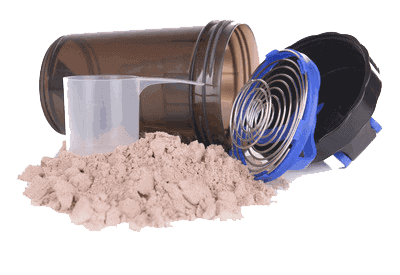
But so… is it really necessary to take protein powder?
Let’s ask ourselves an honest question.
Do you really need to supplement protein?
Or are you just following the herd, driven by relentless advertising and locker room fads?
Because let’s face it: between glossy magazines, pumped-up influencers, and supplement brands that shout “improve your performance!”, today it almost seems like you can’t train without a shaker in hand .
But the truth? It’s much simpler (and less expensive) than that.
If you eat enough calories , eat a balanced and varied diet , and calibrate it to your workouts…
you don’t need protein powder. Period.
️ Real food is enough (and more)
A good diet, structured to support your physical goals, provides:
-
complete proteins , with all the essential amino acids
-
micronutrients , essential for recovery and immune system
-
and a natural digestion that stimulates the metabolism better
Eggs, lean meat, fish, legumes, dairy products, even certain grains… can give you everything you need, without artificial powders .
❌ The Risk of Excess: More is NOT Better
Too much protein?
-
They put strain on the kidneys , especially if hydration is poor
-
They are transformed into fat if in caloric surplus
-
They create nutritional imbalances , reducing the space for good fats, complex carbohydrates and fibre.
So no: more protein does not mean more muscle . It just means more stress on your body.
And probably more unnecessary expenses.
⚖️ The key point: personalized protein balance
Every fighter should know their protein needs based on:
-
body weight
-
frequency and intensity of training
-
goals (mass, definition, performance)
-
food style
If you can already achieve it with real food…
why waste money on an expensive powder?
Protein powder is not the enemy, but it is not the savior either .
Use it only when you need it. Not out of habit, fashion or insecurity.
Fight with your head, not just your muscles.
Street Fight Mentality. Always.
Do you want to know how to calculate your real protein needs , without falling for marketing myths?
It’s simpler (and more powerful) than you think.
You don’t need magic formulas or keyboard gurus. You just need to start with 3 key data :
-
Your body weight (in kg)
-
Your level of physical activity (light, moderate, intense, double session)
-
Your goal: maintenance, muscle growth or definition
Here’s a practical guide for fighters, direct and without fluff:
| Objective | Recommended daily protein | Basic formula |
|---|---|---|
| Maintenance | 1.4 – 1.6 g/kg | Weight x 1.5 |
| Increase muscle mass | 1.6 – 2.2 g/kg | Weight x 1.8 / 2.0 |
| Definition (cut) | 2.0 – 2.5 g/kg | Weight x 2.2 |
Practical example:
A 75 kg fighter in an intense definition phase →
75 x 2.2 = 165 g of protein per day
Now ask yourself:
❓ “How many grams of protein am I getting from real food?”
❓ “Do I really need 1-2 scoops of whey per day or am I just following a fad?”
Train like a fighter. Eat like a pro.
Street Fight Mentality & Fight Sport.
Why is everyone going crazy about protein?
Open any social network and among selfies and punching bags you will find at least one story with a scoop of whey in the shaker.
In sports stores, the supplement shelf is an explosion of colorful jars that scream: GAINZ, RECOVERY, MASS, PERFORMANCE . The message is clear: “if you want to get strong, you MUST take proteins”. And so everyone down to shake…
But the truth is something else.
If you eat properly, in a balanced way, with a diet built around your workouts, you don’t need protein powder .
⚠️ But then why are they everywhere?
Because it is easier to mix a powder in milk than to cook a balanced dish. And it is also true that there are specific cases in which it can be useful or even necessary to integrate them.

When do you REALLY need to supplement protein?
We live in an era where protein has become a religion.
Everywhere you turn — social media, gym, Telegram groups, or sports store shelves — there is only one watchword:
PROTEIN.
You only have to look online to understand the extent of the obsession:
-
Sponsored content everywhere
-
influencers who shake before they’re even warmed up
-
brands that promise miracles in powder
-
entire shelves in stores with fluorescent jars and names that seem to be taken from a Marvel movie
And so it happens what you see every day in the locker room:
those who play sports, those who go to the gym, those who fight, those who train even a little seriously, always have a protein jar at home . And often not just one: two, three, four… plus other magic jars to mix.
But why? Is it really a necessity or just a habit?
Very often, integration is adopted based on hearsay , not real need:
-
“My training partner takes them, so I do too”
-
“I read that if you work out and don’t take protein… you lose everything”
-
“They told me that they are absolutely necessary after the workout”
And so the daily ritual begins:
1 30g measuring cup
Then maybe 2, “just to be safe”
And off you go… with the shaker, even 2 or 3 times a day
But stop for a moment and think:
Are you taking protein because you actually need it or just because everyone else is?
The point is simple:
Integration only makes sense if there is a shortage or a specific need.
Otherwise, it’s like putting turbo on a bicycle: it’s useless, it costs money and it can even cause damage.
You are not weak because you don’t take whey, and you don’t automatically become strong just because you take it.
It’s your diet, training, recovery and lifestyle that make the difference.
In the next section we will see the 4 real cases in which it makes sense to integrate proteins.
No fads. Just fighter reality.
When Should You Use Protein Powder? The 4 Real Cases
✅ 1. You are vegan or vegetarian
Without prejudice, it is a fact: without animal sources it is more difficult to reach the complete protein requirement , especially if you train hard like a fighter.
Plant proteins often do not have a complete amino acid profile , or are less bioavailable. In this case, a good plant protein powder (I use soy protein isolate) can become essential to avoid deficiencies .
Choose blended plant proteins (soy, rice, pea) to have a more balanced amino acid profile.
✅ 2. You don’t eat enough (and you realize it too late)
It happens often: you eat in a hurry, you skip meals, you forget lunch. The result? Low calories, low proteins, performance that collapses.
And if you eat too little, it’s not just your muscles that go down , but also your immune system, hormone levels and mental recovery.
Here, protein powders are a quick and concrete help to fill the gap without too much hassle , especially if you are in cut or are always on the go.
✅ 3. Too many hours pass between meals
You know those days when you grab a quick sandwich at 7 and then… skip everything until the evening?
Result: glycemic collapse, muscle catabolism, chemical hunger and risk of evening binges .
A protein shake mid-day or post-workout can stabilize blood sugar , keep you feeling full, and block catabolism .
It’s not a meal, but it’s better than nothing when you can’t eat real food.
✅ 4. Too much time passes between training and eating
You train and then:
-
you come home late,
-
you’re on your lunch break and you have to go back to work,
-
you have to take the kids to soccer,
-
you have other things to do…
The result? No fuel for recovery.
In this post-workout window, consuming a quick protein source is essential to stop catabolism and jump-start recovery .
A protein shake with a little carbohydrate is the ideal solution: fast, digestible, effective.
⚖️ How much protein do you REALLY need?
For a fighter or athlete who trains hard:
-
1.6–2.2 g of protein per kg of body weight is the optimal range (according to ISSN and recent studies).
-
Exceeding these amounts does not make you stronger : beyond a certain limit, the surplus is eliminated or transformed into fat.
And no, you don’t have to take them all with the dust .
❌ What happens if you overdo it?
-
Kidneys under stress (especially if already compromised).
-
Waste of money (a quality whey costs…).
-
False food security : Convincing you that “just one shake is enough,” instead of learning to actually eat well.
Brutal conclusions
Protein powders aren’t magic.
They aren’t necessary for everyone.
But they are useful for many , in certain contexts.
If:
-
you’re in cut,
-
you train often,
-
you are vegetarian,
-
or you have a hectic life,
OK, go ahead and shake it up . But do it consciously and as a support to your diet. Not as a substitute.
Street Fight Mentality
Train hungry. Eat like a warrior. Recover like a killer.
Don’t let marketing fool you: true strength is built with awareness.
️

️ Food vs Powder – Protein Sources Comparison Chart
| Protein source | Amount | Protein (g) | Digestion time | Pro | Against |
|---|---|---|---|---|---|
| Chicken breast | 100 g | 23 g | 2–3 hours | Complete nutrients, high bioavailability | Requires cooking, less practical |
| Whole eggs | 2 eggs | 13 g | 2–4 hours | Good fats, vitamins, complete proteins | More caloric, less suitable for extreme cutting |
| Canned Tuna | 100 g | 25 g | 2–3 hours | Economical, ready to eat | High sodium, repetitive taste |
| Greek Yogurt 0% | 150 g | 15–17 g | 1–2 hours | Excellent snack, digestible | Average protein content |
| Cottage cheese | 100 g | 12–14 g | 1–2 hours | Rich in natural casein, satiating | Less protein than other sources |
| Cooked Lentils | 200 g | 18 g | 3–4 hours | Plant source, rich in fiber | Incomplete amino acid profile |
| Tempeh | 100 g | 18–20 g | 2–3 hours | Fermented, excellent plant source | Less widespread, taste not for everyone |
| Parmesan cheese | 30 g | 11 g | 2–4 hours | Dense in calcium and protein | High caloric density, to be dosed |
| Cooked Quinoa | 150 g | 9 g | 2–3 hours | Complex carbohydrates + proteins | Low protein content |
| Whey isolate | 30 g | 25 g | 30–60 min | Quick, convenient, highly digestible | Expensive, less filling |
| Micellar caseins | 30 g | 24 g | 6–8 hours | Slow release, perfect before bed | Slow digestibility, heavy taste |
| Plant-based protein powder | 30 g | 20–22 g | 1–2 hours | Vegan-friendly, good complete blends | Amino acid profile to integrate |
This table helps you to consciously choose which source to use based on the time of day, your goals and practical needs .
Why this table is useful:
✔️ It allows you to quickly understand what you are really consuming.
✔️ It shows you that real food is often more complete and satiating.
✔️ It helps you choose the right protein source at the right time (morning, post-workout, evening).
⚠️ Common Mistakes to Avoid with Protein Powder
Let’s be honest: we’ve all made at least one of these mistakes .
The important thing is to become aware of them and correct them before they become harmful or useless habits .
Here are the most common mistakes I see every day among fighters, gym-goers and performance enthusiasts:
❌ 1. Taking protein without calculating your needs
Taking them “randomly”, because everyone does it or because “it can’t do any harm”, is a waste.
Calculate first how much protein you really need based on your weight, goals and workouts.
Your body is not an infinite warehouse.
❌ 2. Thinking that more protein = more muscle
It’s a myth.
Going above 2.2–2.5 g/kg of body weight won’t make you grow any bigger , it’ll just cost you money and can put a strain on your kidneys.
Muscle growth depends on training stimuli + recovery + overall diet , not just proteins.
❌ 3. Use the powder instead of meals
A shaker can fill a hole, but it is not a substitute for a complete meal .
It lacks fiber, micronutrients, good fats and real satiety.
Protein powders are a supplement , not a dietary shortcut .
❌ 4. Ignoring the protein intake of real food
Many people think they need 2-3 scoops a day… and then forget that they have already eaten:
-
eggs for breakfast
-
chicken for lunch
-
tuna for dinner
In the end, they exceed their requirement by 40-50 g without realizing it .
Real food does count.
❌ 5. Getting influenced by marketing and “expert friends”
All that glitters is not gold whey.
The ads tout the benefits, but they don’t know your lifestyle, goals, or metabolism .
Listen to your body, not just the algorithm.
Mini Guide: Protein Requirements for Fighters
Quick Calculation + Top Foods + Checklist “Do I Really Need Whey?”
1. Calculate your daily protein requirement
Basic formula:
Body weight (kg) × Goal factor = Gr. protein per day
| Objective | Factor (g/kg) |
|---|---|
| Muscle maintenance | 1.4 – 1.6 g/kg |
| Increase muscle mass | 1.6 – 2.2 g/kg |
| Definition (cut) | 2.0 – 2.5 g/kg |
Example: 72kg Fighter in cutting phase → 72 × 2.2 = 158g protein/day
️ 2. Top 10 “Real” Protein Foods (not powder)
| Food | Amount | Proteins |
|---|---|---|
| Chicken breast | 100 g | 23 g |
| Whole eggs | 2 eggs | 13 g |
| Bresaola | 50 g | 16 g |
| Greek Yogurt 0% | 150 g | 15–17 g |
| Canned Tuna | 100 g | 25 g |
| Cottage cheese | 100 g | 12–14 g |
| Tempeh | 100 g | 18–20 g |
| Cooked Lentils | 200 g | 18 g |
| Parmesan cheese | 30 g | 11 g |
| Cooked Quinoa | 150 g | 9 g |
✅ 3. Checklist – Do You Really Need Protein Powder?
Answer honestly:
☐ Have you calculated how much protein you already consume from food?
☐ Do you often skip meals or have long intervals without eating?
☐ Do you train twice a day or in time slots away from meals?
☐ Do you have a vegan/vegetarian diet and struggle to balance your protein intake?
☐ Are you often in a calorie deficit (cut) and struggle to reach the recommended amounts?
If you checked at least 2 boxes , a shake a day might make sense.
If you didn’t check any, you can probably do without it .
Protein powder is a tool , not a necessity for everyone.
Knowing your body and lifestyle is the basis for deciding if and when to use it wisely.
Street Fight Mentality & Fight Sport.
My personal experience with protein powders
Let’s be clear: I have a protein jar at home too . I’ve had it for years.
But I don’t see it as a daily must , nor as a magic shortcut to growth.
In my case, I use protein powder only in 2 specific situations :
When I train twice a day (e.g. sparring in the morning + conditioning in the afternoon)
When I have busy days , trips, events or courses where I can’t sit down for a full meal within 60–90 minutes of training
My “emergency” combo is simple:
30g whey isolate + 40g oats + 1 tsp peanut butter.
It’s quick to drink, doesn’t weigh me down, and keeps me going until the real meal.
But if I have a choice, I prefer to eat solid food.
Real food has another impact: on digestion, energy, satiety and also on the connection with your body.
I am not against supplements. But I am for awareness.
Use protein powder as a tool, not a mental crutch.
Still having doubts about how much protein you really need?
Do you train hard but don’t know if you’re eating enough ?
Do you have a thousand jars at home but you’re not sure if you really need them ?
Do you want practical and personalized advice, without sales, without filters ?
Write me in the comments or contact me via @mail:
I’ll answer you privately. No pre-packaged answers, just real experience from fighter to fighter.
Training is serious business. Eating well is part of the strategy.
Street Fight Mentality & Fight Sport.
Conclusion – Protein Powder for Fighters, Do You Really Need It?
In the world of martial arts and combat sports, where every drop of sweat counts and every round can be the deciding one, your nutrition is as much a weapon as a well-placed jab .
And protein ? It’s a critical part of that fuel.
But beware of the mental trap that affects even the most experienced fighters: “more protein = more results” . It’s not that simple. And often, it’s not even true .
✅ YES, proteins are essential
There is no doubt about it: if you train consistently, intensely and want to improve performance, recovery and body composition, you need to ensure an adequate protein intake .
Proteins:
-
They build and repair muscles
-
They support the immune system
-
They stabilize hormone levels
-
They help in controlling hunger and body fat
A fighter who doesn’t eat enough protein is like a race car with watered-down gasoline. It might start, but then it dies when it really matters.
❌ NO, they are not necessary if you already eat well
If your eating plan is:
-
balanced,
-
rich in quality proteins (lean meat, eggs, fish, legumes, dairy products),
-
well distributed throughout the day,
then you probably don’t need protein powder . Not only that, you risk spending money unnecessarily or worse, straining your kidneys , neglecting other nutrients or falling into caloric imbalances.
A good diet always beats a bad supplement.
The real question is: do you really need them?
Don’t just ask, “Is protein good for you?” Ask
, “Do I REALLY need it in powder form?”
Are you in one of the 4 situations where integrating them makes sense (vegan, insufficient nutrition, long fasts, post-workout delays)?
Then yes: use them wisely .
Are you someone who eats well, cooks carefully, has a solid nutritional plan?
Then be careful not to use protein powder as a mental crutch .
⚔️ The right approach? Functional, not fanatical
Integration is not a religion, it is a means , not an end.
It is useful when it is needed.
It is not useful because everyone does it .
Every fighter must learn to think like a high-level athlete , not like a consumer who follows the masses.
And that means knowing your body , listening to it, testing, correcting, calibrating.
Street Fight Mentality & Fight Sport
Being a fighter is not just about throwing punches and sparring , but also about making smart decisions off the mat , on the plate and in your mind.
It means training strategically, eating consciously, recovering intelligently .
It means choosing what to put into your body with the same care you choose your techniques in combat .
Protein doesn’t make you invincible. But knowing when you need it… can make the difference between mediocre recovery and explosive performance.
Make your choices as a clear warrior, not a confused follower .
Do you have doubts about which proteins to choose? Do you want a free guide on how to calculate your daily protein needs?
Write me in the comments or sign up for the newsletter.
War is also won… at the table.
Street Fight Mentality & Fight Sport.
Always.
FAQ – Everything You (Probably) Didn’t Dare to Ask About Protein Powders
❓ How much protein do I need per day if I play combat sports?
It depends on your weight, workout intensity and goals.
On average:
-
1.6 – 2.2 g per kg of body weight is the optimal range for serious exercisers.
Example: if you weigh 70 kg → between 112 g and 154 g of protein per day.
You don’t have to get it all in protein powder! Real food counts too.
❓ Whey, Casein or Vegan Proteins?
It depends on:
-
Time of day
→ Whey: post-workout, fast
→ Casein: before bed, slow release -
Food style
→ Vegan: ideal for vegetarians/vegans (soy, pea, rice)
If you are omnivorous and looking for performance: a quality Whey isolate is often the top choice.
If you are ethical or have intolerances: complete plant blends .
❓ Are proteins bad for the kidneys?
⚠️ Only if you have pre-existing kidney problems or excessive doses for long periods .
With normal consumption and a healthy body, there are no documented risks . But be careful of unnecessary excesses: you don’t need 250 g of protein a day just because the influencer on duty does it.
❓ Can I take protein even on non-training days?
Yes, if:
-
You can’t cover your needs with food
-
You are in recovery
-
You need a quick meal
But it is not mandatory . If you eat well, you can also do without it on your off days.
❓ How many times a day can I take protein powder?
On average: 1 time per day is more than enough for most athletes.
If you have a specific need (low calorie diet, 2 training sessions, etc.), you can go up to 2.
But beyond 2 daily doses , it is better to review the diet as a whole.
❓ Can I use protein as a meal replacement?
Only in an emergency , NOT as a habit.
A meal is much more than a protein source : it also needs good fats, fiber, micronutrients.
A shake can fill a hole, but it is not a complete diet .
❓ What is the best time to take them?
⏱️ Immediately after training , together with a source of carbohydrates (e.g. banana, oat flakes).
Or:
-
Mid-morning or mid-afternoon as a snack
-
Before sleep (casein) during cutting or recovery phase
❓ Do proteins make you fat?
Only if you exceed your overall calorie requirement.
Protein itself does not make you fat , but it does contain calories .
→ If you exceed, fat can also come from there.
Have any other specific questions? Write me in the comments or via email.
Better to clarify today than waste time (and muscle) tomorrow.


